
Robotics and the UN Sustainable Development Goals
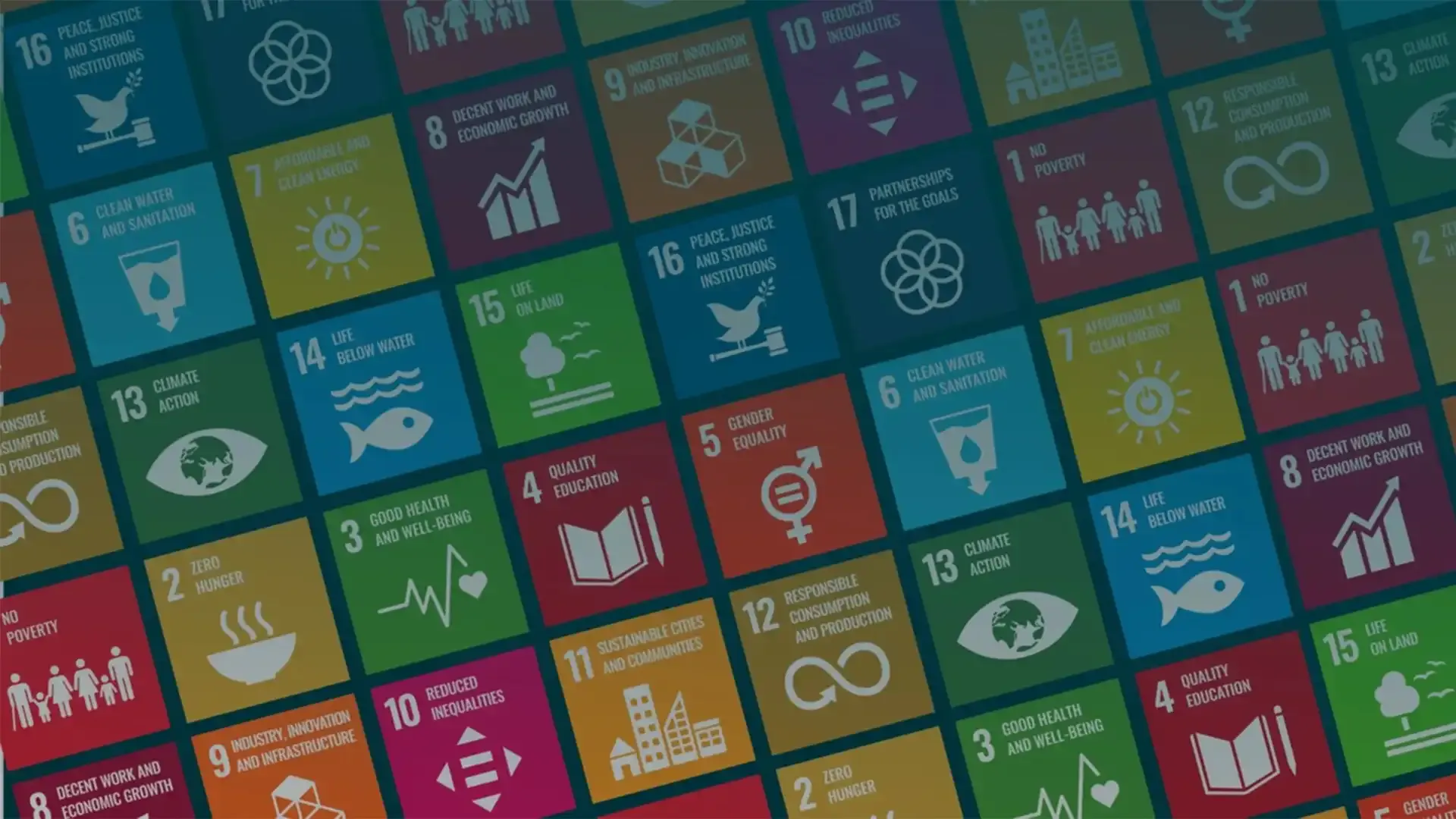
In 2015, the world agreed on an ambitious promise. The United Nations Sustainable Development Goals (SDGs) established a shared blueprint for addressing some of humanity's most pressing challenges—from poverty and healthcare inequality to clean water, decent work, sustainable cities, and climate action. The vision was expansive, but the timeline was finite. By 2030, governments, industries, and societies were expected to collectively move toward a more equitable and sustainable future. A decade later, the scale of that challenge has become even clearer. Population growth is accelerating. Urban infrastructure is under pressure. Healthcare systems remain unevenly distributed. Climate events are becoming more frequent and severe. In many parts of the world, dangerous and repetitive jobs continue to expose workers to unacceptable risks. This is where the conversation around robotics becomes significantly more important. Because the future of robotics is no longer defined solely by industrial productivity. Increasingly, it is being shaped by a much larger question: Can intelligent machines become instruments of sustainable development? The answer may determine how quickly humanity progresses toward its most important collective goals.
Sustainability's Biggest Challenges Are Also Human Challenges
The Sustainable Development Goals are often discussed in terms of policy frameworks and global indicators. Yet beneath every goal lies a fundamentally human problem.
A sanitation worker entering a toxic sewer. A stroke survivor waiting months for rehabilitation access. Communities struggling with aging infrastructure. Industrial workers exposed to hazardous environments. Cities attempting to manage waste systems designed decades ago.
These are not merely operational inefficiencies. They are issues of safety, dignity, public health, and equitable opportunity.
But the larger shift is that many of these challenges share a common characteristic—they involve environments that are repetitive, dangerous, physically demanding, or difficult to scale using conventional approaches alone.
This is precisely where robotics is beginning to create meaningful impact.
From Automation to Human-Centered Progress
For years, public conversations around robotics were dominated by concerns about job displacement and automation.
Yet the emerging reality is considerably more nuanced.
Some of the most impactful robotics deployments globally are focused not on replacing people, but on protecting them, augmenting their capabilities, and enabling access to services that previously remained inaccessible.
Consider sanitation infrastructure.
Several countries continue to struggle with hazardous sewer and wastewater maintenance practices. Inspection and cleaning activities often involve confined spaces, toxic gases, and severe occupational risks. Robotic systems capable of performing inspection, cleaning, and monitoring tasks remotely are gradually changing this equation.
Yet the real significance lies elsewhere.
Removing human beings from life-threatening environments is not merely an engineering achievement. It directly aligns with the principles of SDG 3 (Good Health and Well-Being), SDG 8 (Decent Work and Economic Growth), and SDG 10 (Reduced Inequalities).
The machine, in this context, becomes a tool for human dignity.
The Rise of Robotics in Public Infrastructure
Sustainable development increasingly depends on infrastructure resilience.
Urban populations continue to expand, placing extraordinary pressure on sewer networks, water systems, transportation infrastructure, and waste management processes. Traditional maintenance methods often struggle to keep pace with this complexity.
Inspection robots equipped with cameras, sensors, artificial intelligence, and autonomous navigation capabilities are enabling infrastructure operators to identify defects earlier, monitor assets continuously, and reduce operational risks.
The implications extend far beyond maintenance efficiency.
Early detection prevents infrastructure failures that can disrupt communities, contaminate water systems, and impose significant economic costs. Remote inspections reduce human exposure to hazardous conditions while improving service reliability for millions of citizens.
In many ways, smart robotics is becoming an invisible but increasingly essential layer of sustainable cities.
Healthcare Access and the Democratization of Recovery
Perhaps nowhere is the human dimension of robotics more visible than in healthcare.
Worldwide, millions of individuals require long-term rehabilitation following neurological injuries and mobility impairments. Access to intensive therapy, however, remains uneven and frequently constrained by workforce limitations.
Robotic rehabilitation systems are beginning to bridge this gap.
Gait training robots, assistive mobility technologies, and AI-enabled rehabilitation platforms allow patients to receive highly repetitive, measurable, and personalized therapy. More importantly, they expand the reach of rehabilitation services that may otherwise remain inaccessible.
This is where the conversation becomes more important.
The objective is not to replace clinicians. Rather, it is to empower healthcare professionals to deliver better outcomes at greater scale.
Viewed through the lens of sustainable development, robotics contributes directly to SDG 3 by improving healthcare access and promoting healthier lives for all age groups.
Climate Goals Demand Technological Multipliers
Climate action often appears disconnected from robotics.
In reality, the relationship is becoming increasingly significant.
Industrial inspection robots can identify methane leaks in energy infrastructure. Autonomous systems can optimize maintenance schedules to improve energy efficiency. Robotic monitoring platforms can support renewable energy facilities and help reduce unnecessary resource consumption.
Predictive maintenance powered by robotic inspections also prevents equipment failures that lead to environmental damage, production disruptions, and excessive material wastage.
Japan built robotics leadership through industrial precision. Emerging economies may build theirs through public-impact innovation—deploying intelligent machines not merely to automate production, but to address environmental resilience and sustainable infrastructure management.
The distinction matters.
One model optimizes factories. The other helps optimize societies.
Building Technologies That Reflect Human Values
Sustainability is ultimately about choices.
What technologies do we prioritize? Which problems do we consider worth solving? How do we define progress?
Robotics offers extraordinary capabilities. Yet its greatest contribution may not be measured in processing speeds, sensor sophistication, or autonomous decision-making.
Its deeper significance lies in where it is deployed and whom it serves.
Across sanitation systems, industrial environments, healthcare facilities, and public infrastructure networks, a new category of robotics is emerging—one designed not only for efficiency but also for safety, accessibility, and social impact.
Deployment experience increasingly shows that meaningful innovation occurs at the intersection of engineering excellence and human need.
The future of robotics, therefore, may be less about machines becoming more human and more about technology becoming profoundly human-centered.
The Next Decade Will Be Defined by Purpose-Driven Innovation
As 2030 approaches, achieving the Sustainable Development Goals will require more than policy commitments and incremental improvements. The scale of global challenges demands technologies capable of amplifying human potential while reducing human vulnerability.
Robotics is steadily proving that it can be one of those technologies.
Not because machines can solve every societal problem. They cannot.
But because intelligently designed robotic systems can remove people from danger, extend healthcare access, strengthen public infrastructure, improve environmental stewardship, and create safer forms of work.
The future of sustainability may not arrive through technology alone.
Yet it is increasingly difficult to imagine achieving sustainable development without it.
And perhaps that is the most important realization of all: the next era of robotics will not be defined by what machines can do for industry. It will be defined by what intelligent systems make possible for humanity itself.
Related Blogs

Hazardous-Environment Robotics: Where Physical AI Meets India's Sanitation and Refinery Safety Crisis
At the India AI Impact Summit 2026 in New Delhi, EY India demonstrated “Scout,” a companion robot combining digital twins, robotics, and physical AI to help refinery workers track hazardous pipeline alerts that overwhelm small monitoring teams. It's a compelling demo. But in India, this isn't a preview of the future — it's already a deployed industry, with a body count that makes the case for it.

India’s Robotics Revolution: Innovation Beyond Software
For much of the past two decades, India's innovation story has been synonymous with software. The country became a global technology powerhouse by building expertise in IT services, digital platforms, and enterprise software. That legacy remains a remarkable achievement, but a quieter transformation is now taking shape—one driven not by code alone, but by machines capable of interacting with the physical world. This shift marks the rise of next-generation robotics, where engineering, artificial intelligence, advanced electronics, and intelligent sensing converge to solve problems that software alone cannot address. As industries modernise and infrastructure grows more complex, India's next wave of innovation is increasingly being built in laboratories, manufacturing facilities, and robotics research centres.

Scaling Deep-Tech Innovation: From Research to Commercialisation
Brilliant engineering ideas rarely fail because they lack technical merit. More often, they struggle to cross the difficult bridge between laboratory success and large-scale deployment. Building a working prototype is an achievement. Transforming that prototype into a reliable product that industries trust, regulators approve, and customers adopt is an entirely different challenge. This transition is where every deep tech startup is tested. Unlike software ventures that can iterate rapidly with minimal physical constraints, deep-tech companies must navigate complex engineering, manufacturing, certification, funding, and market adoption simultaneously. As India strengthens its innovation ecosystem, the ability to commercialise advanced technologies may become just as important as inventing them.