
Robotics in Sustainable Urban Infrastructure
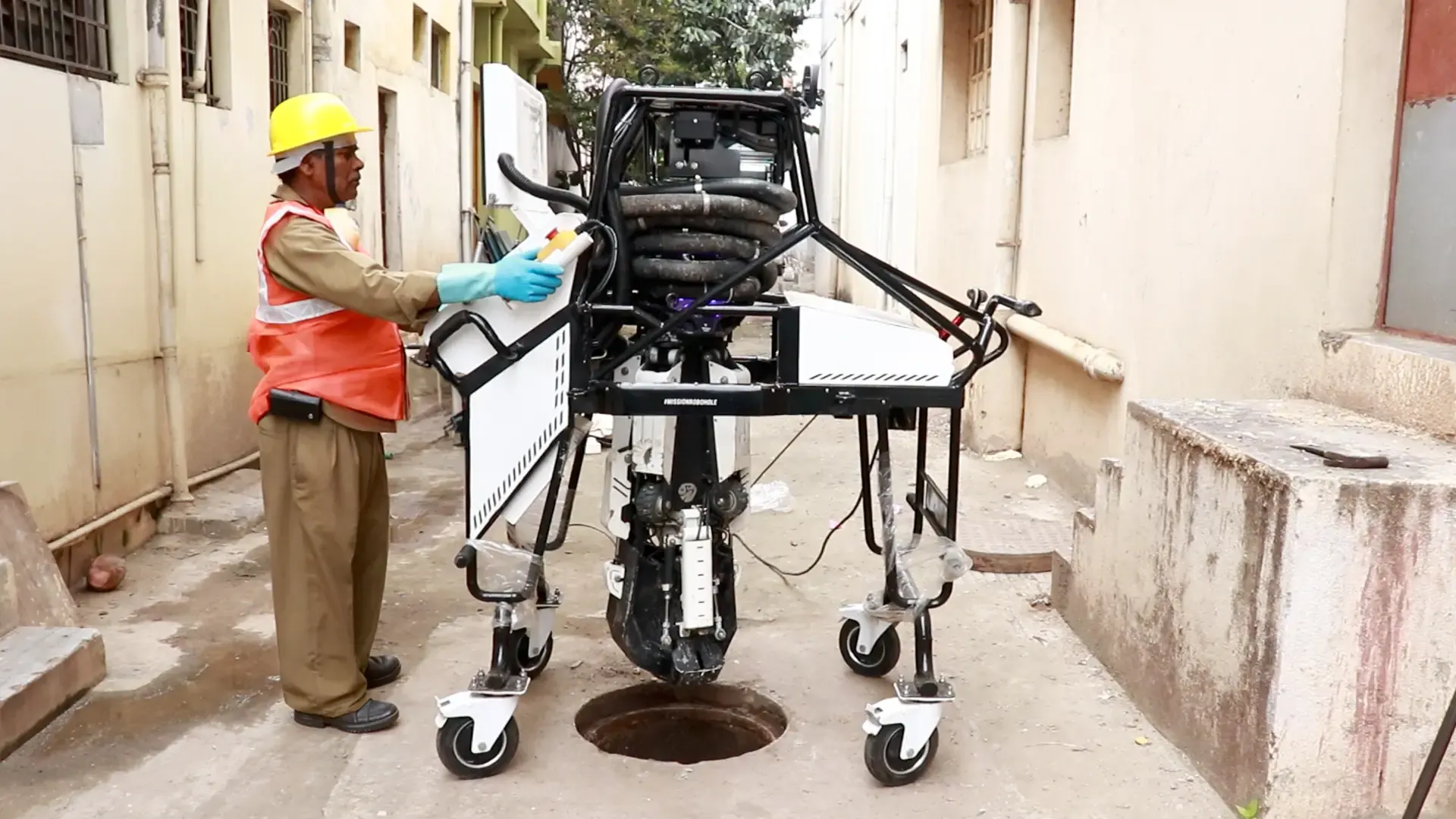
When people imagine the cities of the future, they often picture electric mobility, intelligent buildings, autonomous transport, and digitally connected public services. Urban innovation is usually imagined through what rises above the ground. But the real test of a sustainable city lies elsewhere. It exists inside drainage networks that prevent flooding before it begins. Inside waste management systems operating silently through the night. Inside healthcare infrastructure supporting aging populations. Inside maintenance systems that protect public spaces before breakdown becomes visible. The future of urban infrastructure will not be defined only by what cities build. It will increasingly be defined by how intelligently cities maintain themselves. This is where robotics is quietly becoming one of the most important forces shaping urban sustainability. Not because machines alone can solve urban complexity, but because modern cities are reaching a scale where traditional infrastructure management models are no longer sufficient. The implications extend far beyond automation. Robotics is beginning to reshape how cities think about safety, resilience, labour, environmental sustainability, and public service delivery itself.
Urban Infrastructure Is Entering a New Era of Complexity
Cities across the world are expanding at unprecedented speed.
By the middle of this century, a majority of the global population will live in urban regions. Emerging economies in particular are experiencing rapid urbanization alongside rising infrastructure pressure, environmental stress, and public service demands.
Yet the larger shift is structural.
Urban infrastructure was historically designed around reactive management. Roads were repaired after damage. Sewer systems were cleaned after blockages. Waste management responded after overflow. Public systems often operated through manual intervention triggered by visible failure.
That model is becoming increasingly unsustainable.
Climate volatility, population density, aging infrastructure, and resource constraints are forcing cities to move toward predictive and intelligent infrastructure management.
This is where robotics becomes transformative.
Robotics Is Expanding Beyond Industrial Automation
For decades, robotics was associated primarily with manufacturing floors and industrial productivity. Machines optimized assembly lines, reduced operational errors, and increased production efficiency.
Urban infrastructure presents a very different challenge.
Cities are dynamic, unpredictable, and deeply human environments. Public systems must operate continuously despite weather disruption, infrastructure aging, traffic density, public health emergencies, and environmental pressure.
This complexity requires a new generation of robotic systems designed not only for efficiency, but for adaptability and resilience.
Across the world, robotics is already entering critical urban sectors:
- Intelligent waste management systems
- Automated sewer inspection technologies
- Robotic sanitation infrastructure
- Infrastructure monitoring drones
- Smart mobility support systems
- AI assisted disaster response robotics
- Robotic rehabilitation and healthcare support systems
Yet the real significance lies elsewhere.
These systems are not simply replacing labour. They are gradually becoming part of the operational nervous system of future cities.
Sustainable Infrastructure Requires More Than Green Construction
Much of the sustainability conversation still focuses heavily on renewable energy, carbon reduction, and environmentally conscious construction. While these remain essential, sustainable urban infrastructure also depends on operational sustainability.
A city cannot become truly sustainable if its core systems remain dependent on unsafe, inefficient, or reactive management models.
Consider urban sanitation.
In many rapidly growing cities, sewer maintenance still relies heavily on dangerous manual labour. Drainage failures contribute to flooding, public health risks, and environmental contamination. Waste systems struggle to scale alongside urban expansion.
Robotic sanitation systems fundamentally alter this equation.
Remote operated sewer cleaning robots, automated inspection devices, sensor integrated drainage monitoring, and predictive maintenance systems allow cities to reduce hazardous human exposure while improving operational reliability.
But the larger shift is moral as much as technological.
Sustainable cities cannot be built on invisible human suffering.
This is where robotics intersects directly with dignity centered urban development.
Climate Resilience Is Driving Infrastructure Automation
Climate change is accelerating the urgency for intelligent infrastructure systems.
Extreme rainfall events, urban flooding, heat stress, waste accumulation, and infrastructure failure are becoming more frequent across major cities worldwide. Traditional maintenance systems often respond too slowly to prevent cascading urban disruption.
Robotics introduces something critical into this equation: responsiveness at scale.
AI integrated monitoring systems can detect infrastructure stress before catastrophic breakdown occurs. Autonomous inspection systems can identify damage inside pipelines, bridges, and confined infrastructure spaces without endangering workers. Disaster response robotics can support emergency operations during floods, fires, or structural collapse.
The implications extend far beyond operational convenience.
Urban resilience itself is becoming increasingly dependent on infrastructure intelligence.
Cities that fail to modernize maintenance ecosystems may find themselves unable to manage future climate volatility effectively.
Healthcare Infrastructure Is Becoming Part of the Urban Sustainability Conversation
One of the most overlooked dimensions of sustainable urban infrastructure is healthcare capacity.
Aging populations, rising neurological disorders, rehabilitation demand, and healthcare accessibility challenges are placing enormous strain on urban medical systems. Hospitals alone cannot sustain future healthcare demands through traditional staffing models.
This is where robotics assisted healthcare systems are becoming increasingly important.
Rehabilitation robotics, assistive mobility technologies, hospital automation systems, and intelligent patient support infrastructure are helping healthcare systems expand care delivery without compromising quality.
Yet the real significance lies elsewhere.
Healthy cities are not defined only by roads, transport, or construction. They are defined by how effectively urban systems preserve human capability, independence, and quality of life.
That realization is gradually broadening the definition of sustainable infrastructure itself.
Emerging Economies Could Define the Next Robotics Model
Historically, robotics leadership emerged from industrial economies focused on manufacturing precision and productivity optimization.
But the future may unfold differently.
Emerging economies are confronting infrastructure challenges at extraordinary scale. Rapid urbanization, uneven public systems, sanitation complexity, healthcare gaps, and climate vulnerability create conditions where public impact robotics becomes strategically essential.
This creates a fascinating global contrast.
Japan built robotics leadership through industrial excellence. Emerging economies may shape the next era of robotics through infrastructure and social impact innovation.
That distinction matters enormously.
The most globally influential robotics systems of the next decade may not necessarily emerge from luxury automation markets. They may emerge from technologies designed to solve public infrastructure challenges affecting millions of people daily.
But Technology Alone Cannot Build Sustainable Cities
Despite the promise of robotics, sustainable urban transformation cannot rely on machines alone.
Governance remains decisive.
Cities require:
- Long term infrastructure planning
- Ethical technology frameworks
- Workforce transition strategies
- Public investment ecosystems
- Data governance standards
- Inclusive access models
- Skilled operational talent
Without these foundations, even advanced robotic systems risk becoming isolated pilot projects rather than scalable infrastructure solutions.
This is where the conversation becomes more important than technology itself.
Because sustainable infrastructure is ultimately about institutional capacity as much as engineering capability.
The Cities of the Future Will Think, Adapt, and Protect
Urban infrastructure is entering a historic transition.
For generations, cities were built primarily to expand. The next generation of cities will be designed to sense, adapt, maintain, and protect themselves intelligently.
Robotics will play a central role in that evolution.
Not because machines will replace human systems, but because modern urban life has become too interconnected, too dense, and too fragile to operate through reactive infrastructure alone.
The future of sustainable cities will therefore depend on more than concrete, steel, or digital dashboards.
It will depend on whether societies can build urban systems that are not only technologically advanced, but also humane, resilient, and capable of protecting both people and public infrastructure at scale.
And perhaps that is the most important shift underway.
The future of robotics is no longer confined to factories.
It is becoming embedded into the living fabric of cities themselves.
Related Blogs

Hazardous-Environment Robotics: Where Physical AI Meets India's Sanitation and Refinery Safety Crisis
At the India AI Impact Summit 2026 in New Delhi, EY India demonstrated “Scout,” a companion robot combining digital twins, robotics, and physical AI to help refinery workers track hazardous pipeline alerts that overwhelm small monitoring teams. It's a compelling demo. But in India, this isn't a preview of the future — it's already a deployed industry, with a body count that makes the case for it.

India’s Robotics Revolution: Innovation Beyond Software
For much of the past two decades, India's innovation story has been synonymous with software. The country became a global technology powerhouse by building expertise in IT services, digital platforms, and enterprise software. That legacy remains a remarkable achievement, but a quieter transformation is now taking shape—one driven not by code alone, but by machines capable of interacting with the physical world. This shift marks the rise of next-generation robotics, where engineering, artificial intelligence, advanced electronics, and intelligent sensing converge to solve problems that software alone cannot address. As industries modernise and infrastructure grows more complex, India's next wave of innovation is increasingly being built in laboratories, manufacturing facilities, and robotics research centres.

Scaling Deep-Tech Innovation: From Research to Commercialisation
Brilliant engineering ideas rarely fail because they lack technical merit. More often, they struggle to cross the difficult bridge between laboratory success and large-scale deployment. Building a working prototype is an achievement. Transforming that prototype into a reliable product that industries trust, regulators approve, and customers adopt is an entirely different challenge. This transition is where every deep tech startup is tested. Unlike software ventures that can iterate rapidly with minimal physical constraints, deep-tech companies must navigate complex engineering, manufacturing, certification, funding, and market adoption simultaneously. As India strengthens its innovation ecosystem, the ability to commercialise advanced technologies may become just as important as inventing them.