
How Robotics Reduces Downtime in Manufacturing Plants
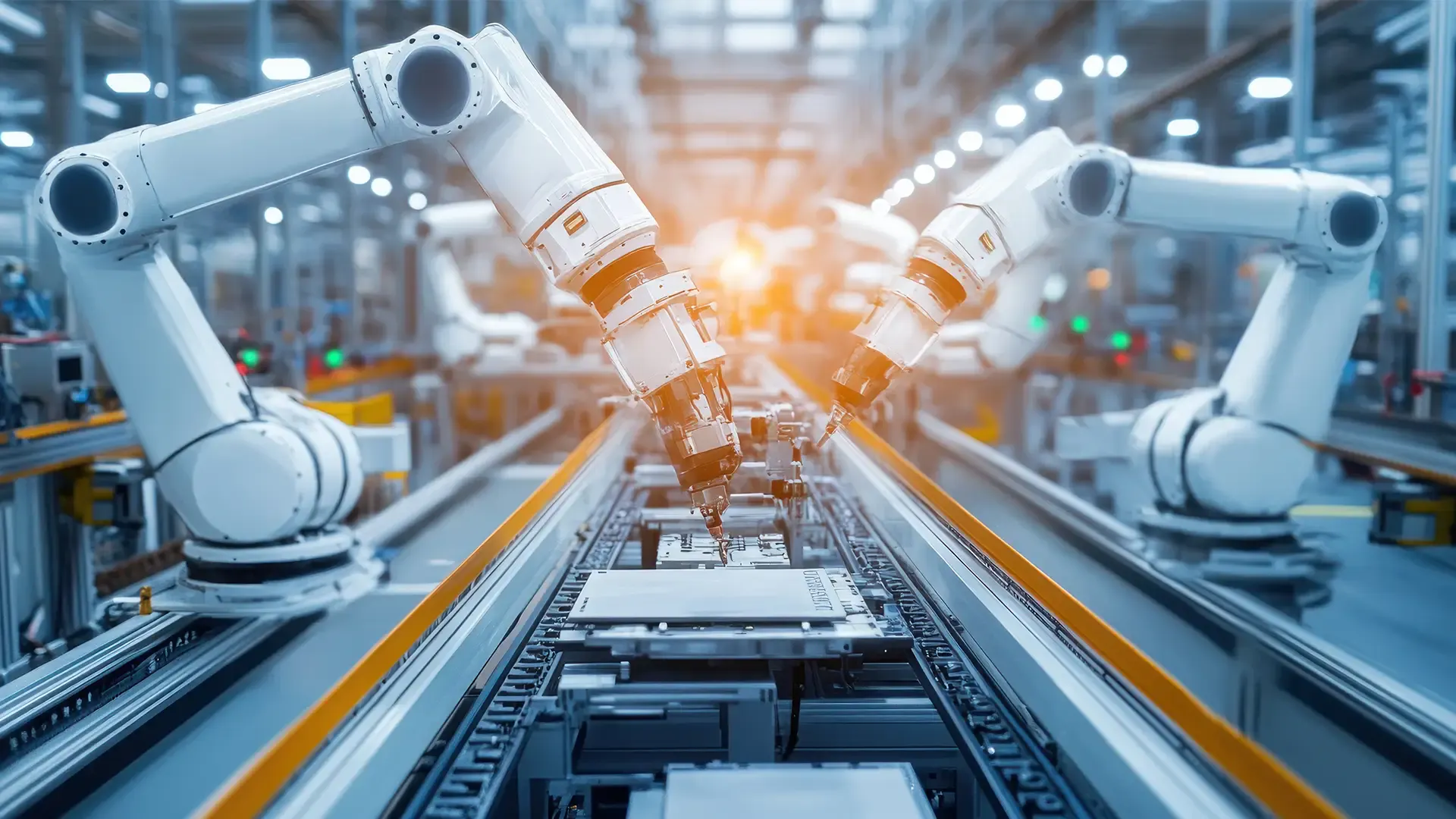
The most expensive minute in manufacturing is often the one nobody anticipated. A conveyor stops unexpectedly. A robotic arm falls out of calibration. A critical component overheats. An inspection reveals a fault that has silently developed for weeks. Production pauses. Orders get delayed. Supply chains begin to ripple. The cost meter starts running. For modern manufacturers, downtime is no longer an operational inconvenience. It has become a strategic vulnerability. Across industries—from automotive and electronics to food processing and heavy engineering—manufacturing plants are operating in environments defined by tighter delivery windows, increasingly complex supply chains, and relentless pressure to improve productivity. In such a landscape, resilience matters as much as efficiency. This is precisely why robotics is becoming indispensable to manufacturing operations. Not because robots simply work faster. But because they are fundamentally changing how factories anticipate, prevent, and respond to disruptions.
Downtime Is Often a Visibility Problem Disguised as a Technical Failure
Manufacturing interruptions rarely happen without warning.
Machines generate signals long before failure occurs. Equipment vibrates differently. Motors gradually heat up. Components begin operating outside optimal parameters. Small process deviations quietly accumulate.
Yet traditional manufacturing environments often struggle to detect these signals early enough.
Maintenance teams historically operated within reactive frameworks. Equipment would be repaired after breakdowns or serviced according to predetermined schedules. Both approaches carry limitations. Reactive maintenance creates costly disruptions, while periodic maintenance sometimes leads to unnecessary interventions and hidden inefficiencies.
The larger shift is that manufacturing plants are increasingly moving toward continuous operational awareness.
This transition is where robotics plays an increasingly transformative role.
From Machines That Perform Tasks to Systems That Prevent Failures
Industrial robotics has evolved significantly beyond repetitive automation.
Modern robotic systems are increasingly integrated with sensors, machine vision technologies, artificial intelligence, and real-time monitoring capabilities. They are becoming intelligent participants in manufacturing ecosystems rather than isolated machines performing predefined functions.
Consider robotic inspection systems deployed within production environments.
These systems can continuously monitor equipment conditions, identify anomalies, and detect defects that may remain invisible during manual inspections. Automated inspection routines enable organizations to identify problems before they escalate into production interruptions.
Similarly, autonomous mobile robots now navigate facilities carrying materials, replenishing production lines, and reducing delays associated with manual logistics.
Yet the real significance lies elsewhere.
Every robotic intervention that prevents a stoppage contributes to something larger than productivity metrics.
It creates predictability.
And predictability has become one of manufacturing's most valuable competitive advantages.
Why Predictive Maintenance Is Emerging as Manufacturing's New Operating Philosophy
For decades, maintenance was viewed primarily as a support function.
Today, it is increasingly becoming a strategic capability.
Global manufacturers are investing heavily in predictive maintenance systems because unexpected downtime creates consequences that extend far beyond repair expenses. Production losses, delayed deliveries, inventory disruptions, contractual penalties, and reputational damage often generate costs significantly greater than the equipment failure itself.
Robotics is accelerating this transition toward predictive maintenance.
Inspection robots can repeatedly monitor production assets without fatigue or inconsistency. Vision systems can identify wear patterns with remarkable precision. Sensor-equipped robotic platforms can gather operational data continuously and relay actionable insights to maintenance teams.
The implications extend far beyond operational optimization.
Manufacturing facilities are gradually evolving into environments that can observe themselves.
A factory capable of continuously understanding its own condition becomes inherently more resilient than one operating through periodic assessments and reactive responses.
Downtime Is Also a Human Challenge
Manufacturing discussions often focus heavily on productivity metrics, throughput percentages, and cost reduction.
These metrics matter.
But they represent only part of the story.
Unexpected downtime places enormous pressure on people.
Maintenance teams are suddenly forced into emergency interventions. Production personnel work under intensified timelines. Supply chain managers scramble to minimize delays. Operators encounter uncertainty that affects workflow and morale.
This is where the conversation becomes more important.
Reducing downtime is also about improving the quality of work.
Robotic systems that automate hazardous inspections, monitor equipment continuously, and manage repetitive logistical activities allow human expertise to shift toward higher-value responsibilities.
Engineers can focus on optimization instead of firefighting.
Technicians can prioritize strategic maintenance rather than crisis management.
Operators can work within environments that are more stable, predictable, and safe.
In many ways, the most significant contribution of robotics may not be replacing tasks but reducing operational chaos.
The Rise of the Self-Aware Factory
Manufacturing plants are becoming increasingly complex ecosystems.
A disruption in one production line can affect procurement schedules, inventory planning, transportation networks, and customer commitments. The interdependence of modern manufacturing means that small failures often produce disproportionately large consequences.
This complexity is accelerating the adoption of intelligent manufacturing systems.
Robotics now intersects with artificial intelligence, digital twins, Industrial Internet of Things platforms, and advanced analytics to create factories capable of sensing, analyzing, and responding to operational conditions in real time.
The factory floor is becoming increasingly self-aware.
Inspection robots can identify abnormalities before breakdown occurs. Collaborative robots can dynamically adapt to production demands. Autonomous systems can optimize material movement based on changing conditions.
But the larger shift is philosophical.
Manufacturing is transitioning from an environment where humans react to problems toward one where intelligent systems continuously reduce the probability of those problems occurring in the first place.
Why Downtime Reduction Is Becoming a Strategic National Imperative
Manufacturing competitiveness increasingly depends on reliability.
Countries seeking to strengthen industrial capabilities are investing heavily in advanced manufacturing technologies because resilient production systems directly influence economic growth, export potential, and global competitiveness.
Germany advanced manufacturing leadership through precision engineering. Japan became synonymous with quality-driven production systems. Several emerging economies are now embracing Industry 4.0 initiatives to build future-ready industrial ecosystems.
Robotics occupies a critical position within this transition.
The ability to reduce downtime through intelligent automation, predictive maintenance, and real-time operational visibility is no longer merely a technological advantage. It is becoming an industrial necessity.
Organizations that successfully deploy robotics are not simply purchasing machines.
They are investing in continuity.
They are creating manufacturing systems capable of adapting to uncertainty while maintaining productivity and reliability.
The Future of Manufacturing Will Be Measured in Resilience
For generations, manufacturing excellence was defined primarily by speed and scale.
The next era may be defined by something entirely different.
Resilience.
Factories of the future will not succeed solely because they produce more. They will succeed because they stop less, recover faster, and understand their operations with unprecedented clarity.
Every inspection robot that identifies an emerging fault, every autonomous system that prevents a production delay, and every predictive insight that avoids an unexpected shutdown contributes to a larger transformation.
Robotics is helping manufacturing move beyond reactive operations toward intelligent resilience.
And in an increasingly uncertain world, resilience may become the most valuable product any factory can manufacture.
Related Blogs

Hazardous-Environment Robotics: Where Physical AI Meets India's Sanitation and Refinery Safety Crisis
At the India AI Impact Summit 2026 in New Delhi, EY India demonstrated “Scout,” a companion robot combining digital twins, robotics, and physical AI to help refinery workers track hazardous pipeline alerts that overwhelm small monitoring teams. It's a compelling demo. But in India, this isn't a preview of the future — it's already a deployed industry, with a body count that makes the case for it.

India’s Robotics Revolution: Innovation Beyond Software
For much of the past two decades, India's innovation story has been synonymous with software. The country became a global technology powerhouse by building expertise in IT services, digital platforms, and enterprise software. That legacy remains a remarkable achievement, but a quieter transformation is now taking shape—one driven not by code alone, but by machines capable of interacting with the physical world. This shift marks the rise of next-generation robotics, where engineering, artificial intelligence, advanced electronics, and intelligent sensing converge to solve problems that software alone cannot address. As industries modernise and infrastructure grows more complex, India's next wave of innovation is increasingly being built in laboratories, manufacturing facilities, and robotics research centres.

Scaling Deep-Tech Innovation: From Research to Commercialisation
Brilliant engineering ideas rarely fail because they lack technical merit. More often, they struggle to cross the difficult bridge between laboratory success and large-scale deployment. Building a working prototype is an achievement. Transforming that prototype into a reliable product that industries trust, regulators approve, and customers adopt is an entirely different challenge. This transition is where every deep tech startup is tested. Unlike software ventures that can iterate rapidly with minimal physical constraints, deep-tech companies must navigate complex engineering, manufacturing, certification, funding, and market adoption simultaneously. As India strengthens its innovation ecosystem, the ability to commercialise advanced technologies may become just as important as inventing them.