
Guide to Building a Robotics Startup in India
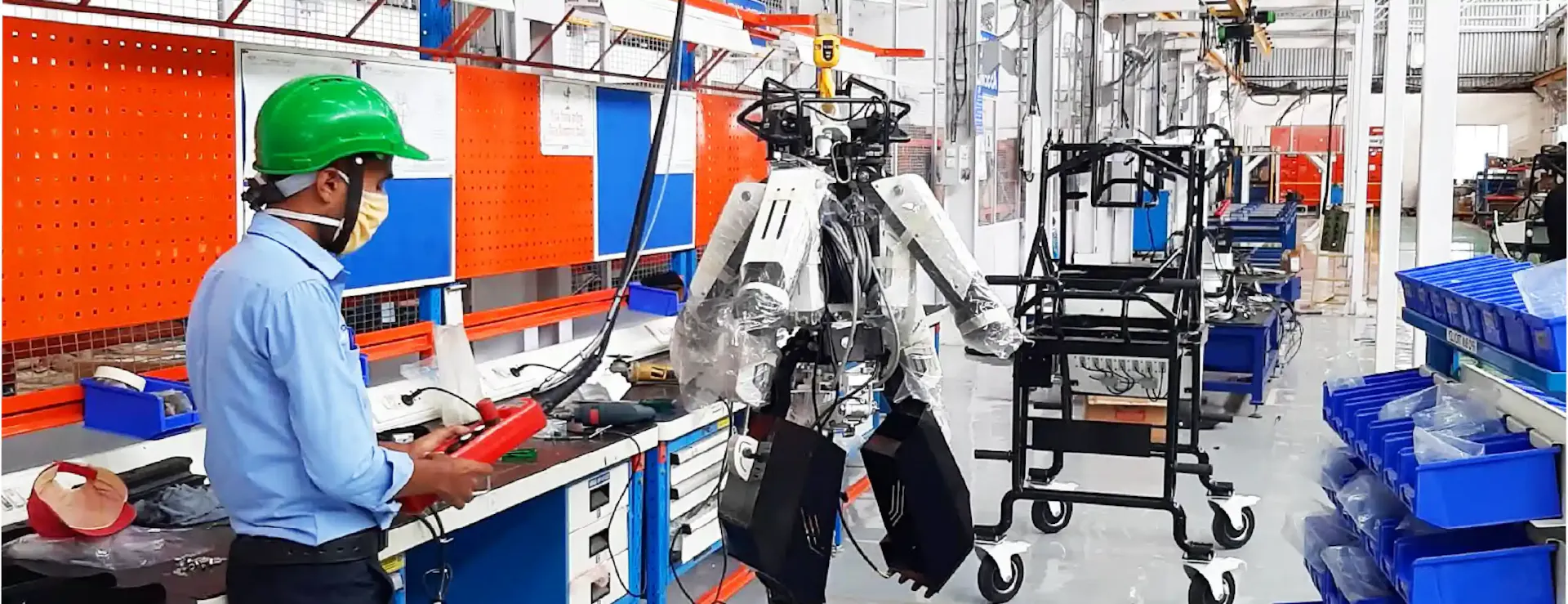
India’s innovation landscape is undergoing a quiet but powerful transformation. For years, the startup ecosystem was dominated by software platforms and consumer applications. Today, a new wave of founders is building technologies that interact with the physical world.
Introduction: The Rise of the Robotics Startup India Ecosystem
India’s innovation landscape is undergoing a quiet but powerful transformation. For years, the startup ecosystem was dominated by software platforms and consumer applications. Today, a new wave of founders is building technologies that interact with the physical world.
This shift has given rise to the robotics startup India ecosystem, where companies focus on engineering-driven solutions rather than purely digital products. These ventures belong to the category known as a deep tech startup, where progress depends on scientific research, advanced engineering, and real-world experimentation.
Unlike conventional startups that scale quickly through software, robotics companies must design, build, and test physical systems that operate reliably in complex environments. This article explores the journey of building a robotics startup in India, from early research in laboratories to large-scale deployment across industries such as industrial robotics.
What Is a Deep Tech Startup in Robotics?
A deep tech startup is a company built on scientific research and engineering breakthroughs rather than simple software innovation. In robotics, deep tech startups combine multiple advanced technologies to build machines capable of solving real-world problems.
A robotics startup typically integrates:
- Advanced mechanical engineering
- Embedded electronics and control systems
- Artificial intelligence and machine learning
- Sensors and perception technologies
- Mechatronics and actuator systems
- Human–machine interaction design
Unlike digital platforms, robotics systems must function reliably in unpredictable conditions such as factories, industrial plants, hospitals, or infrastructure networks. This complexity is what makes robotics both challenging and impactful.
For many founders, entering the robotics startup India ecosystem requires patience, deep technical expertise, and long-term commitment.
How Does a Robotics Startup Begin?
Most robotics startups begin with a real-world problem that cannot be solved using existing technologies.
These problems often appear in environments where human work is unsafe, inefficient, or extremely difficult. Founders typically discover these challenges through research projects, industry exposure, or direct field experience.
Key Activities in the Early Research Stage
The early stage of a robotics startup usually includes:
- Identifying a high-risk or inefficient industrial challenge
- Studying existing technologies and their limitations
- Designing experimental prototypes
- Conducting controlled laboratory tests
Many robotics founders emerge from engineering institutions, research laboratories, or industrial organizations where they encounter these operational challenges firsthand.
During this stage, the goal is not commercialization. Instead, the focus is on proving that a technological solution is possible.
Stage One: Research and Problem Discovery
Every successful robotics startup begins with a clear problem statement. Unlike traditional startups that often start with market trends, deep tech startups begin with engineering challenges.
Typical environments where robotics solutions emerge include:
- Industrial manufacturing facilities
- Infrastructure maintenance systems
- Healthcare environments
- Hazardous workplaces
- Public utilities and sanitation networks
Research teams spend months or even years studying these environments before developing initial prototypes.
This stage is crucial because solving the wrong problem can derail even the most advanced technology.
Stage Two: Building the First Prototype
Once the problem is validated, the next step is developing a working prototype. This phase transforms theoretical research into a physical machine.
Challenges of Hardware Development
Unlike software products, robotics systems cannot be modified instantly. Each design change requires physical reconstruction and testing.
Common challenges during prototyping include:
- Hardware components failing under operational stress
- Sensors producing inconsistent data
- Mechanical parts requiring redesign
- Integration issues between software and hardware systems
Each failure teaches engineers something valuable about how the robot behaves in real conditions.
For a deep tech startup, prototype development is often the most resource-intensive stage.
Stage Three: Field Testing in Real-World Conditions
A robot that works inside a laboratory does not automatically perform well in real environments.
Field testing is where robotics startups discover the difference between controlled experiments and operational reality.
Real-World Challenges for Robotics Startup India
Robotics solutions in India often face unique environmental challenges such as:
- Irregular infrastructure layouts
- Harsh weather conditions
- Varying industrial standards
- Unpredictable human interaction
These conditions make field testing essential.
Successful robotics startups treat field trials as an ongoing feedback loop rather than a one-time milestone.
Each deployment generates new insights that guide further design improvements.
Stage Four: Safety and Regulatory Compliance
Robotics systems often operate near humans or within critical infrastructure. As a result, safety and regulatory compliance are essential before large-scale deployment.
Key Regulatory Requirements
A robotics startup must address several compliance requirements, including:
- Industrial safety certifications
- Electrical and mechanical standards
- Environmental regulations
- Government procurement policies
- Worker safety guidelines
For companies working in industrial robotics, compliance standards can be especially strict because machines may operate in hazardous environments.
Planning for regulatory requirements early helps startups scale more efficiently.
Stage Five: Building a Multidisciplinary Robotics Team
A robotics company cannot succeed without a strong engineering team.
Unlike software startups, robotics companies require experts across multiple technical domains.
Core Roles in a Robotics Startup
A typical robotics startup team includes:
- Mechanical engineers designing physical systems
- Electronics engineers developing embedded hardware
- AI and machine learning specialists
- Computer vision engineers for perception systems
- Field engineers responsible for testing and deployment
- Operations teams managing installations and maintenance
Hiring professionals who understand both hardware and software integration is challenging. Retaining them requires a culture focused on innovation, experimentation, and long-term problem solving.
Stage Six: Funding a Deep Tech Robotics Startup
One of the biggest obstacles for robotics founders is funding.
Deep tech startups require larger investments and longer development timelines compared to software companies.
Common Funding Sources
Robotics startups typically secure funding through multiple channels:
- Government innovation grants
- Academic and research funding programs
- Deep tech venture capital firms
- Strategic partnerships with industrial organizations
- Pilot-based procurement agreements
Investors supporting robotics startups often evaluate factors such as intellectual property, engineering depth, and long-term industry impact rather than rapid short-term growth.
Stage Seven: Manufacturing and Supply Chain Development
Once the technology works reliably, the next challenge is scaling production.
Manufacturing is one of the most complex phases of a robotics startup journey.
Key Manufacturing Considerations
Scaling production requires careful planning in areas such as:
- Component sourcing strategies
- Manufacturing partner selection
- Quality assurance processes
- Maintenance and support infrastructure
- Logistics and deployment operations
In the industrial robotics market, reliability is more important than rapid production expansion.
Customers prioritize machines that perform consistently over long operational cycles.
Stage Eight: Market Adoption and Commercial Deployment
Even the most advanced robot must prove its value to customers before achieving widespread adoption.
In the industrial robotics sector, organizations evaluate new technologies based on measurable benefits.
Factors Driving Adoption of Industrial Robotics
Companies adopt robotics solutions when they deliver clear advantages such as:
- Increased operational efficiency
- Reduced safety risks for workers
- Lower long-term operational costs
- Seamless integration with existing workflows
- Reliable technical support and training
Market adoption takes time. However, once trust is established, robotics companies often build long-term relationships with customers.
Why India Is Becoming a Global Hub for Robotics Innovation
India offers several advantages for robotics startups focused on deep technology innovation.
Key Drivers of Robotics Startup Growth in India
Several factors are accelerating robotics innovation in the country:
- Large-scale infrastructure challenges requiring automation
- Expanding industrial and manufacturing sectors
- Increasing focus on worker safety and mechanization
- A strong engineering talent pool
- Government support for innovation and deep tech startups
Solutions developed by robotics startup India companies are often designed for complex environments, making them highly adaptable to global markets.
What Is the Future of Robotics Startups in India?
The next decade will be critical for the growth of robotics innovation in India.
As artificial intelligence, automation, and engineering technologies continue to evolve, robotics will become an essential part of industrial modernization.
Key Trends Shaping the Future
Several trends are expected to define the future of robotics startups:
- Wider adoption of industrial robotics across industries
- Stronger collaboration between academia, startups, and government institutions
- Expansion of robotics in infrastructure and public services
- Increased global demand for robotics technologies developed in India
Startups that succeed will likely combine deep engineering expertise with resilience and long-term vision.
Conclusion: Building a Robotics Startup Requires Patience and Precision
Building a robotics startup in India is not a rapid sprint. It is a long journey that requires persistence, scientific innovation, and disciplined engineering.
From early research in laboratories to large-scale industrial deployment, every stage demands careful planning and problem-solving.
A successful deep tech startup in robotics balances technological ambition with real-world practicality. It focuses not only on innovation but also on reliability, safety, and meaningful impact.
As India continues to embrace automation and industrial transformation, robotics startups will play a central role in shaping safer industries, smarter infrastructure, and more advanced technological ecosystems.
Frequently Asked Questions
What is a robotics startup in India?
A robotics startup in India is a company that designs and develops robotic systems to solve real-world problems across industries such as manufacturing, infrastructure, healthcare, and public utilities.
What makes robotics a deep tech startup sector?
Robotics belongs to the deep tech startup category because it involves advanced engineering, scientific research, and complex hardware systems rather than purely software-based solutions.
Why is industrial robotics important for modern industries?
Industrial robotics improves operational efficiency, enhances workplace safety, and reduces repetitive or hazardous manual tasks in manufacturing and infrastructure environments.
How long does it take to build a robotics startup?
Building a robotics startup often takes several years due to research, prototyping, field testing, regulatory compliance, and manufacturing challenges.
Why is India becoming a hub for robotics startups?
India offers strong engineering talent, growing industrial demand for automation, supportive innovation policies, and large-scale infrastructure challenges that require robotics solutions.
Related Blogs

Can India Become a Global Robotics Leader?
A decade ago, the idea of robots cleaning sewers, assisting rehabilitation therapy, monitoring urban infrastructure, or supporting public healthcare systems in India would have sounded futuristic. Today, some of these technologies are no longer concepts confined to laboratories or global tech conferences. They are entering Indian streets, hospitals, municipalities, and industrial ecosystems in real and measurable ways.

How Robotics Can Prevent Drainage Crises During Monsoon Season
Understanding why urban India floods the way it does requires going underground, quite literally, and examining the state of the infrastructure we rarely think about until it stops working.

Extreme Environment Robotics in India Explained
When we think about robotics, we often picture controlled environments and predictable systems. But in India, robotics is evolving in places that are anything but controlled.