
Robotics and the Future of Labour in Emerging Economies
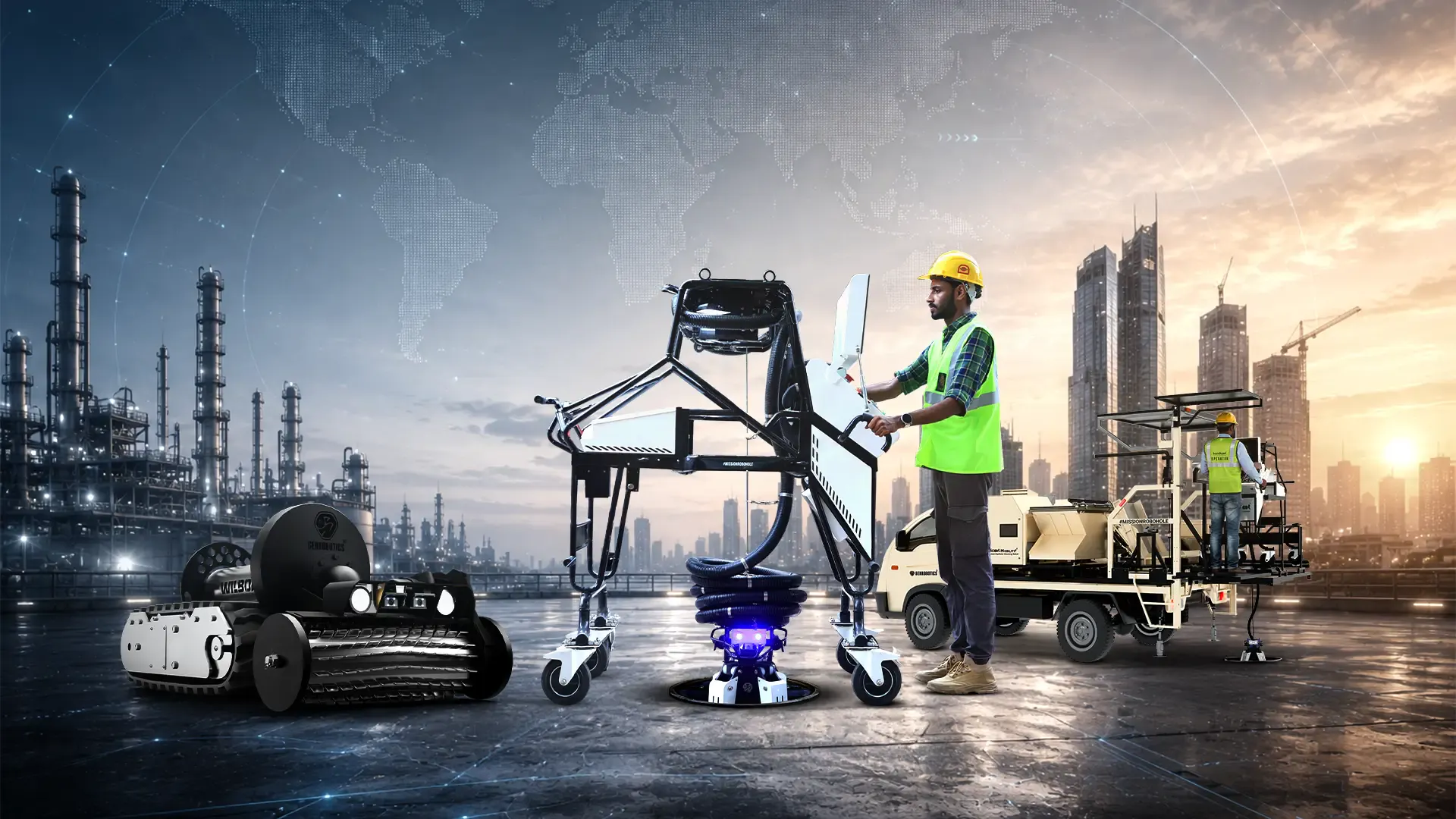
Somewhere beneath the noise of artificial intelligence headlines and automation debates, a quieter transformation is unfolding across emerging economies. It is happening inside factories where human fatigue once dictated productivity. It is happening in hospitals struggling with workforce shortages. It is happening inside sewer lines, warehouses, farms, and rehabilitation centers where dangerous, repetitive, and physically exhausting labour has remained invisible for decades. According to industry estimates, the global robotics market is projected to cross hundreds of billions of dollars over the next decade, driven by rapid advances in artificial intelligence, industrial automation, healthcare robotics, and public infrastructure technologies. Yet the most important robotics story may not emerge from advanced manufacturing alone. It may emerge from societies attempting to solve deeply human problems at scale. The future of labour will not be shaped only by who builds the most advanced robots. It will be shaped by who deploys them to improve worker dignity, public safety, healthcare accessibility, and infrastructure resilience. That distinction matters enormously for emerging economies. Because robotics is no longer merely an industrial upgrade. It is increasingly becoming developmental infrastructure.
Why Emerging Economies Are Rewriting the Automation Narrative
For decades, automation conversations were dominated by developed economies.
Japan focused on industrial precision and demographic challenges. Germany optimized manufacturing efficiency through advanced engineering systems. The United States accelerated robotics through defense innovation, logistics, and computing ecosystems.
Emerging economies, meanwhile, were largely perceived as labour abundant regions where low cost human work reduced the urgency for automation investment.
But the global equation is changing rapidly.
Urbanization pressures, rising infrastructure demands, labour shortages in hazardous sectors, and increasing expectations around safety and productivity are forcing developing nations to rethink the relationship between humans and machines.
India’s automation market alone is expected to grow significantly over the coming years as sectors such as manufacturing, healthcare, logistics, sanitation, and smart infrastructure adopt intelligent systems at greater scale.
Yet the real significance lies elsewhere.
Robotics is increasingly entering spaces where dangerous human labour should never have remained normalized in the first place.
When Robotics Becomes a Question of Human Dignity
This is where the conversation becomes more important than technology itself.
Consider sanitation systems across parts of the developing world. Despite legal bans and repeated policy interventions, hazardous manual sewer cleaning continues to expose workers to toxic gases, infectious waste, oxygen deficient confined spaces, and fatal accidents.
According to multiple sanitation and labour reports, sewer related deaths continue to occur every year due to exposure to gases such as hydrogen sulfide and methane. Long term exposure also contributes to respiratory illnesses, skin diseases, neurological complications, and severe occupational health risks.
The introduction of robotic sewer cleaning systems changes that equation fundamentally.
A machine entering a toxic sewer line instead of a human being is not simply a story about automation. It is a story about redefining the value of human life inside public systems.
This is where internal deployment relevance becomes critical.
Cities adopting mechanized sanitation systems and robotic sewer inspection technologies are not merely upgrading municipal operations. They are rethinking urban governance itself.
The implications extend far beyond sanitation.
Across emerging economies, robotics is increasingly associated with safer work environments, reduced physical exploitation, and modernization of historically neglected sectors.
Healthcare May Become the Most Transformative Robotics Frontier
A similar shift is quietly unfolding inside healthcare systems.
Across large parts of Asia, Africa, and Latin America, rehabilitation access remains deeply uneven. Millions recovering from stroke, spinal injuries, or neurological conditions lack access to structured long term therapy. At the same time, aging populations and chronic illnesses are increasing rehabilitation demand globally.
The World Health Organization has repeatedly highlighted rehabilitation as one of the most underserved healthcare services worldwide.
This is where robotics assisted rehabilitation is beginning to reshape healthcare delivery.
Advanced rehabilitation systems allow therapists to support more patients with greater consistency, measurable outcomes, and repetitive movement precision essential for neuro recovery.
But the larger shift is philosophical.
Emerging economies are beginning to use robotics not only for productivity gains, but for public impact innovation.
That distinction could define the next era of global robotics leadership.
India’s Robotics Opportunity Extends Beyond Manufacturing
Historically, industrial revolutions concentrated power within nations controlling manufacturing and capital intensive infrastructure. The robotics revolution may evolve differently.
Countries capable of building affordable, scalable, and socially deployable robotics systems could become equally influential.
India represents one of the most compelling examples of this possibility.
Unlike many advanced economies, India’s robotics opportunity is not driven solely by factory automation. Its deeper opportunity lies in solving public scale challenges through applied robotics.
Public sanitation. Rehabilitation access. Agricultural productivity. Disaster response. Urban infrastructure maintenance. Smart mobility systems.
These are not niche deployment sectors. They are national transformation sectors.
Importantly, India has already demonstrated its ability to build population scale digital public infrastructure through systems such as Aadhaar and UPI. Robotics could follow a similar trajectory if supported through long term policy alignment, indigenous innovation, and ecosystem investment.
But the larger shift is strategic.
Japan built robotics leadership through industrial precision. India may build it through public impact innovation.
The Real Challenge Is Not Technology. It Is Transition.
Optimism alone, however, cannot obscure the complexities ahead.
Automation anxiety remains real across emerging economies where labour intensive sectors support millions of livelihoods. Discussions around robotics often trigger concerns around displacement, unemployment, and widening inequality.
Those concerns deserve serious attention.
Yet the future of labour may not be defined by a simplistic human versus machine equation. The more realistic future is one of labour transformation.
Dangerous, repetitive, and physically degrading work is increasingly becoming automatable. Simultaneously, new employment ecosystems are emerging around robotics deployment, maintenance, remote operations, AI supervision, infrastructure analytics, and human machine coordination.
This transition will require massive investment in skilling
Without proactive workforce planning, robotics could deepen inequality instead of reducing it.
Governance Will Decide the Winners of the Robotics Era
This is where governance becomes decisive.
The countries that lead the robotics era will not necessarily be those with the most advanced laboratories alone. They will be the nations capable of building institutional ecosystems around deployment.
That includes:
- Public investment
- Ethical automation frameworks
- Workforce retraining
- Startup ecosystems
- Advanced manufacturing support
- AI integration infrastructure
- Municipal modernization programs
Across the Global South, a strategic realization is emerging: robotics is no longer optional infrastructure.
It is becoming national capability infrastructure.
The Future of Labour Will Ultimately Be About Inclusion
Perhaps the most overlooked dimension of robotics is psychological.
When societies deploy robotics inside public systems, they redefine collective expectations around safety, dignity, and governance. Citizens begin expecting safer workplaces, smarter infrastructure, more accountable institutions, and humane labour standards.
Over time, technology stops being perceived as elite innovation and starts becoming civic infrastructure.
That cultural shift may matter more than the machines themselves.
Because ultimately, the future of labour in emerging economies will not be determined only by automation levels or productivity growth.
It will be shaped by whether robotics is deployed extractively or inclusively. Whether it protects human dignity or merely optimizes efficiency.
And perhaps that is the deeper transformation unfolding right now.
The real story of robotics is not about machines becoming more human.
It is about societies finally deciding that certain forms of human suffering should no longer remain acceptable in the age of intelligent systems.
Related Blogs

Hazardous-Environment Robotics: Where Physical AI Meets India's Sanitation and Refinery Safety Crisis
At the India AI Impact Summit 2026 in New Delhi, EY India demonstrated “Scout,” a companion robot combining digital twins, robotics, and physical AI to help refinery workers track hazardous pipeline alerts that overwhelm small monitoring teams. It's a compelling demo. But in India, this isn't a preview of the future — it's already a deployed industry, with a body count that makes the case for it.

India’s Robotics Revolution: Innovation Beyond Software
For much of the past two decades, India's innovation story has been synonymous with software. The country became a global technology powerhouse by building expertise in IT services, digital platforms, and enterprise software. That legacy remains a remarkable achievement, but a quieter transformation is now taking shape—one driven not by code alone, but by machines capable of interacting with the physical world. This shift marks the rise of next-generation robotics, where engineering, artificial intelligence, advanced electronics, and intelligent sensing converge to solve problems that software alone cannot address. As industries modernise and infrastructure grows more complex, India's next wave of innovation is increasingly being built in laboratories, manufacturing facilities, and robotics research centres.

Scaling Deep-Tech Innovation: From Research to Commercialisation
Brilliant engineering ideas rarely fail because they lack technical merit. More often, they struggle to cross the difficult bridge between laboratory success and large-scale deployment. Building a working prototype is an achievement. Transforming that prototype into a reliable product that industries trust, regulators approve, and customers adopt is an entirely different challenge. This transition is where every deep tech startup is tested. Unlike software ventures that can iterate rapidly with minimal physical constraints, deep-tech companies must navigate complex engineering, manufacturing, certification, funding, and market adoption simultaneously. As India strengthens its innovation ecosystem, the ability to commercialise advanced technologies may become just as important as inventing them.