
Predictive Maintenance Using Robotic Inspection Systems
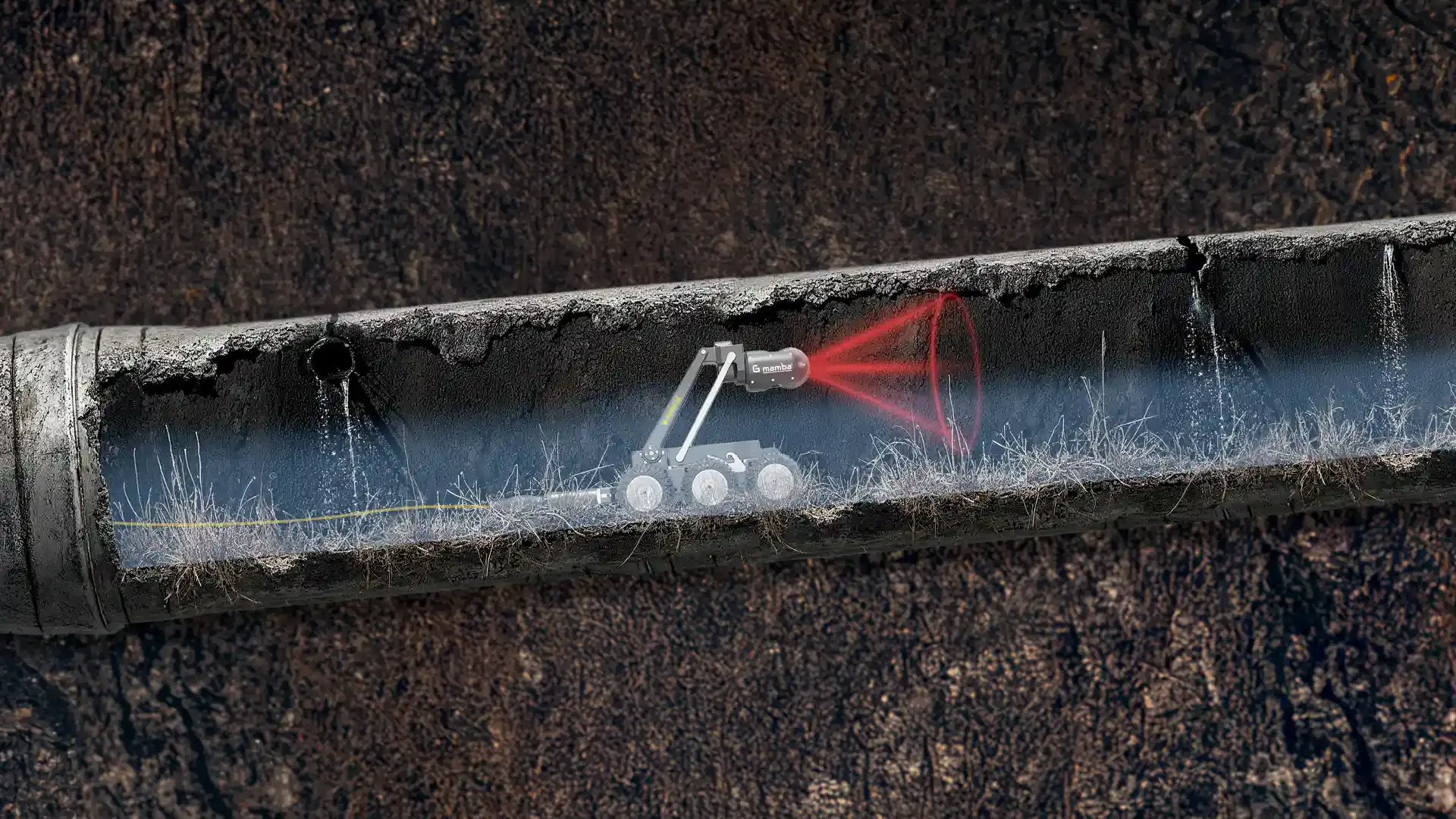
Major industrial failures rarely happen without warning. A pipeline does not suddenly corrode overnight. A motor rarely fails without first generating subtle vibrations. Storage tanks do not develop critical defects in an instant. Infrastructure almost always leaves clues. The challenge is that these clues are often invisible, inaccessible, or ignored until they evolve into expensive disruptions. By the time equipment failure becomes visible, production has already stopped, repair costs have escalated, and safety risks may have intensified. For decades, industries accepted this reality as an unavoidable cost of operations. That assumption is now being challenged. A new generation of robotic inspection systems is enabling organizations to move beyond reacting to failures and toward anticipating them. Predictive maintenance, once considered an aspirational concept, is increasingly becoming an operational necessity. The shift is profound because it changes a fundamental question. Industries are no longer asking, "What broke?" They are increasingly asking, "What signs did we miss?"
The Limits of Maintenance Built Around Calendars
Industrial maintenance has historically operated through two dominant approaches.
The first is reactive maintenance. Equipment operates until failure occurs and repairs are performed afterward.
The second is preventive maintenance. Machinery is serviced according to predefined schedules regardless of its actual condition.
Both models have strengths, but both also have significant limitations.
Reactive maintenance creates unexpected downtime, operational uncertainty, and potentially serious safety consequences. Scheduled maintenance, meanwhile, often leads to unnecessary interventions, inefficient resource allocation, and the possibility of overlooking defects developing between inspection intervals.
The implications extend far beyond maintenance budgets.
Modern industries operate in increasingly interconnected ecosystems where a single equipment failure can disrupt production lines, delay supply chains, impact public services, and generate financial consequences that extend across entire organizations.
This is where the conversation becomes more important.
Industrial systems are becoming too complex and too valuable to manage through periodic visibility alone.
What organizations increasingly require is continuous awareness.
Why Predictive Maintenance Is Fundamentally About Visibility
Every industrial asset tells a story.
Pumps vibrate differently when bearings begin wearing out. Electrical systems exhibit thermal variations before failures occur. Pipelines reveal subtle signs of corrosion. Mechanical components generate acoustic patterns that change long before breakdown becomes inevitable.
The difficulty has never been the absence of information.
The challenge has been obtaining it consistently.
Human inspections, however skilled, remain constrained by accessibility, safety considerations, and practical limitations. Many industrial assets operate in environments that are hazardous, remote, or difficult to inspect frequently.
This is precisely where robotic inspection systems are creating transformative value.
Equipped with cameras, sensors, thermal imaging systems, ultrasonic technologies, and artificial intelligence capabilities, these machines can enter environments that challenge conventional inspection methods. They can inspect repeatedly, collect high-quality data, and identify patterns that may otherwise remain undetected.
Yet the real significance lies elsewhere.
Robotic inspection systems are not merely gathering information.
They are enabling infrastructure to become observable.
And observability is rapidly becoming one of the most valuable capabilities in modern industry.
From Inspections to Intelligence
Traditional inspections often function as isolated events.
An engineer visits an asset, gathers observations, and generates a report.
Predictive maintenance transforms inspection into a continuous intelligence process.
Inspection robots can collect data repeatedly and with remarkable consistency. Sensor readings accumulated over time reveal trends rather than isolated measurements. Machine learning models can identify emerging anomalies and estimate failure probabilities.
The maintenance function gradually evolves.
Instead of responding to problems after disruption occurs, organizations gain opportunities to intervene during earlier stages of equipment deterioration.
This may appear to be a technological enhancement.
In reality, it represents an entirely different operating philosophy.
Industries are beginning to move from episodic understanding toward persistent awareness.
And awareness changes decision-making.
The Rise of Autonomous Eyes Across Industries
One of the most compelling aspects of robotic inspection systems is their applicability across diverse industrial environments.
In oil and gas operations, inspection robots assess pipelines, storage facilities, and hazardous processing areas. Manufacturing plants deploy robotic inspection systems to monitor production assets and reduce downtime. Power utilities use autonomous technologies to inspect electrical infrastructure and transmission systems. Mining operations increasingly rely on robotic platforms to inspect confined or inaccessible environments.
Public infrastructure is also becoming a major area of transformation.
Water systems, bridges, drainage networks, tunnels, and sanitation infrastructure require continuous monitoring but often remain difficult to inspect manually at the frequency modern cities demand.
The larger shift is that inspection robotics is evolving into an infrastructure intelligence layer.
The question is no longer whether assets should be inspected.
The question is how continuously their health can be understood.
Safety Is Becoming an Outcome of Better Information
Equipment failures frequently carry human consequences.
Industrial incidents can place workers at risk, disrupt essential services, and expose communities to environmental hazards.
Predictive maintenance reduces these risks by improving situational awareness.
Early anomaly detection allows organizations to plan interventions under controlled conditions rather than during emergency situations. Maintenance personnel can work more safely. Production interruptions become more manageable. Infrastructure systems operate with greater reliability.
This is where predictive maintenance becomes larger than operational optimization.
It becomes an enabler of resilience.
The quality of decisions improves because uncertainty decreases.
And in complex systems, reducing uncertainty often becomes the foundation of safety itself.
Why Predictive Maintenance Is Also a Workforce Transformation Story
Discussions around robotics often focus heavily on automation.
The reality inside industrial environments is more nuanced.
Inspection robots do not eliminate the need for human expertise.
They elevate it.
Professionals who once spent considerable time performing repetitive or hazardous inspections increasingly focus on interpreting data, designing maintenance strategies, and managing intelligent systems.
The nature of work changes.
Engineers become decision architects.
Technicians become operators of increasingly sophisticated diagnostic ecosystems.
The implications extend far beyond productivity improvements.
Predictive maintenance is also redefining industrial skill requirements and creating opportunities for higher-value human contribution.
Technology assumes routine data collection and hazardous exposure.
People increasingly concentrate on analysis, judgment, and strategy.
The Future Belongs to Systems That Understand Themselves
History often remembers transformative technologies not because they performed tasks faster but because they fundamentally changed how societies understood complexity.
Electricity transformed production. The internet transformed information. Data analytics transformed decision-making.
Robotic inspection systems may ultimately transform something equally significant.
They are teaching industrial infrastructure to communicate its condition continuously.
Some nations established industrial leadership through scale.
Others through manufacturing precision.
The next generation of industrial leaders may emerge through their ability to build intelligent systems capable of predicting problems before they become crises.
Because predictive maintenance is not fundamentally about fixing equipment.
It is about creating organizations that can see earlier, understand better, and act before disruption occurs.
And in an increasingly complex world, that ability may become one of the defining characteristics of resilient industries.
The factories, utilities, and public systems of the future will not simply operate.
They will observe themselves, learn continuously, and increasingly anticipate their own needs.
That transition marks far more than a maintenance evolution.
It marks the emergence of infrastructure that is beginning, in its own way, to become aware.
Related Blogs

Hazardous-Environment Robotics: Where Physical AI Meets India's Sanitation and Refinery Safety Crisis
At the India AI Impact Summit 2026 in New Delhi, EY India demonstrated “Scout,” a companion robot combining digital twins, robotics, and physical AI to help refinery workers track hazardous pipeline alerts that overwhelm small monitoring teams. It's a compelling demo. But in India, this isn't a preview of the future — it's already a deployed industry, with a body count that makes the case for it.

India’s Robotics Revolution: Innovation Beyond Software
For much of the past two decades, India's innovation story has been synonymous with software. The country became a global technology powerhouse by building expertise in IT services, digital platforms, and enterprise software. That legacy remains a remarkable achievement, but a quieter transformation is now taking shape—one driven not by code alone, but by machines capable of interacting with the physical world. This shift marks the rise of next-generation robotics, where engineering, artificial intelligence, advanced electronics, and intelligent sensing converge to solve problems that software alone cannot address. As industries modernise and infrastructure grows more complex, India's next wave of innovation is increasingly being built in laboratories, manufacturing facilities, and robotics research centres.

Scaling Deep-Tech Innovation: From Research to Commercialisation
Brilliant engineering ideas rarely fail because they lack technical merit. More often, they struggle to cross the difficult bridge between laboratory success and large-scale deployment. Building a working prototype is an achievement. Transforming that prototype into a reliable product that industries trust, regulators approve, and customers adopt is an entirely different challenge. This transition is where every deep tech startup is tested. Unlike software ventures that can iterate rapidly with minimal physical constraints, deep-tech companies must navigate complex engineering, manufacturing, certification, funding, and market adoption simultaneously. As India strengthens its innovation ecosystem, the ability to commercialise advanced technologies may become just as important as inventing them.