
Why India Needs a National Robotics Ecosystem
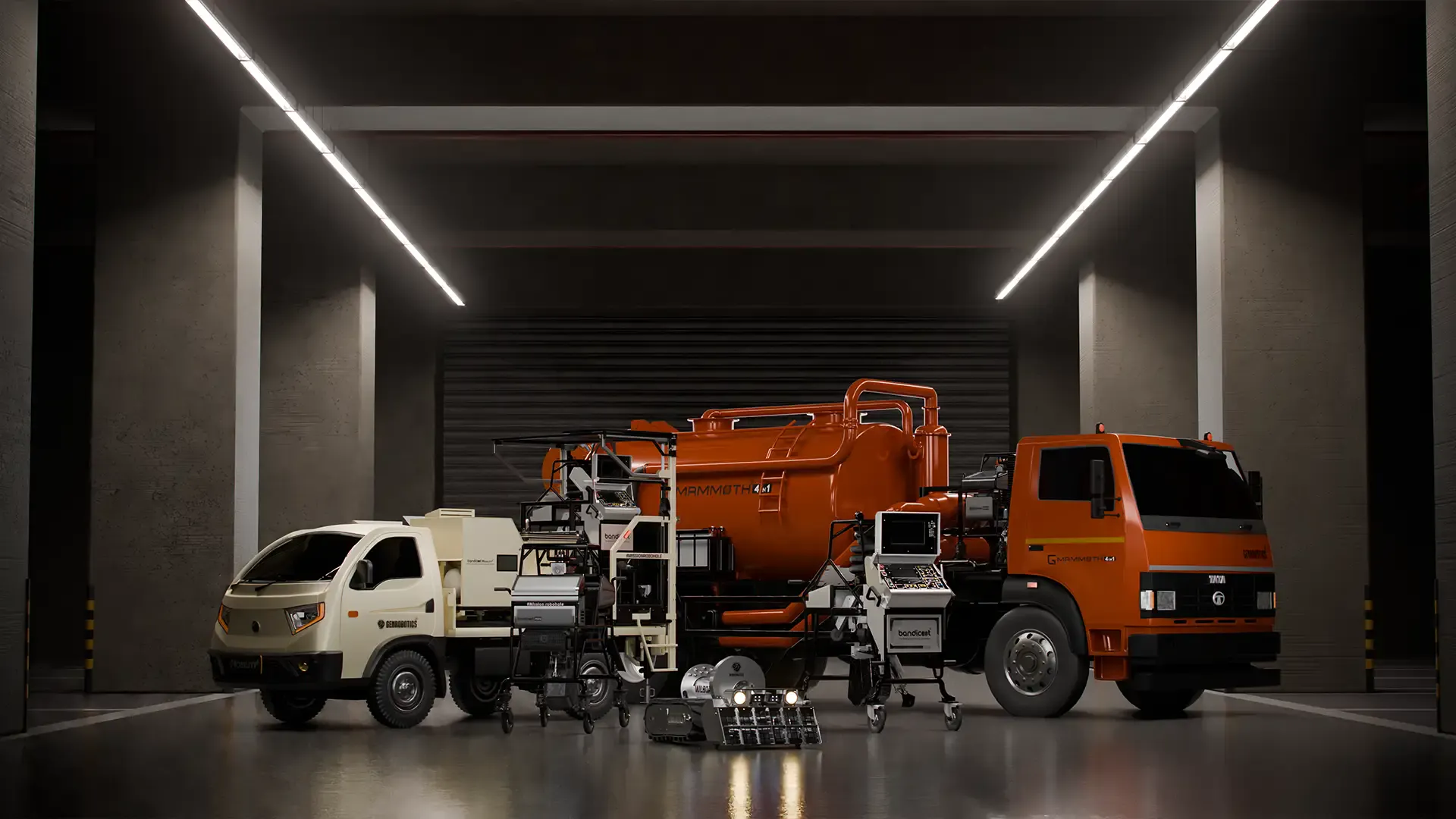
For decades, robotics was largely viewed through an industrial lens. Automated assembly lines. Precision manufacturing. Automotive plants. Electronics production. Industrial efficiency. The global robotics narrative revolved around factories becoming smarter, faster, and less dependent on repetitive human labour. That model shaped the rise of robotics powerhouses across the world. Japan built leadership through industrial precision. Germany focused on manufacturing engineering excellence. China accelerated large scale automation through state backed industrial expansion. But the next phase of robotics evolution may unfold very differently. The defining robotics opportunities of the coming decades may emerge not only inside factories, but across hospitals, sanitation systems, disaster response networks, urban infrastructure, public healthcare, mobility ecosystems, and climate resilience operations. And this is where the conversation around India becomes far more significant. Because India’s robotics future may ultimately be shaped not by manufacturing automation alone, but by how effectively the country builds a national robotics ecosystem capable of solving large scale public challenges.
A Nation of Scale Requires a Different Robotics Vision
Many countries adopted robotics primarily to address labour shortages and industrial productivity demands.
India faces a fundamentally different reality.
The country is navigating rapid urbanization, rising healthcare burdens, aging infrastructure systems, sanitation challenges, climate vulnerability, public healthcare gaps, and enormous pressure on civic service delivery. These are not isolated issues. They represent interconnected national scale challenges affecting millions of lives simultaneously.
This is where the larger shift begins.
Robotics in India cannot remain confined to factory automation discussions because India’s developmental pressures extend far beyond industrial output alone.
A robotic rehabilitation system restoring mobility after stroke treatment. A sewer cleaning robot eliminating hazardous manual intervention. Autonomous inspection systems monitoring urban infrastructure. AI assisted agricultural robotics supporting precision farming.
These are not niche technological experiments.
They represent public impact technologies.
And perhaps that distinction could define India’s global robotics identity in the decades ahead.
Why Public Impact Robotics Could Become India’s Strategic Advantage
Countries often lead technological revolutions based on the problems they are forced to solve.
The United States became dominant in digital innovation partly because of its software ecosystem and research infrastructure. China scaled manufacturing technologies through industrial expansion. Japan advanced robotics through demographic pressure and industrial modernization.
India’s opportunity may emerge through public systems innovation.
This is where the implications become far more important than robotics itself.
Because building robotics solutions for sanitation, healthcare accessibility, infrastructure maintenance, rehabilitation, and civic operations requires innovation under real world constraints. Affordability. Scalability. Harsh deployment environments. Public infrastructure integration. Human centered design.
These conditions create a unique engineering culture.
And increasingly, the world may need precisely this kind of robotics leadership.
Affordable public impact robotics could become one of the defining global technology categories of the next decade.
The Future of Robotics Is Becoming Deeply Human
Popular imagination still often portrays robotics through cinematic imagery.
Humanoid machines. Fully autonomous systems. Futuristic automation replacing human involvement entirely.
Yet the real transformation unfolding globally is far more grounded.
Some of the most meaningful robotics deployments today involve restoring human dignity, improving worker safety, supporting healthcare recovery, and strengthening public infrastructure resilience.
A rehabilitation robot helping a stroke survivor regain mobility carries societal significance beyond engineering sophistication. A robotic sewer cleaning system protecting sanitation workers from toxic exposure changes the moral architecture of urban infrastructure itself.
This is where the conversation becomes more important.
Because robotics is gradually evolving from a productivity technology into a societal infrastructure technology.
And countries that recognize this transition early may shape the future of public systems globally.
Manufacturing Alone Cannot Sustain Robotics Leadership
Industrial robotics remains important. Manufacturing automation will continue expanding across automotive, electronics, logistics, and warehousing ecosystems.
But long term robotics leadership now depends on something broader.
Integrated ecosystems.
Research institutions. Public procurement frameworks. Startup ecosystems. AI development infrastructure. Sensor manufacturing capabilities. Robotics testing environments. Healthcare integration systems. Municipal adoption frameworks. Skilled talent pipelines.
Without these interconnected layers, robotics growth remains fragmented.
This is where India faces both a challenge and an opportunity.
Exceptional engineering talent already exists. Startup ecosystems are expanding rapidly. Public digital infrastructure has demonstrated global scale capability through systems like Aadhaar, UPI, and digital governance platforms.
Yet robotics ecosystems require a different level of convergence.
Hardware, AI, mobility systems, healthcare infrastructure, policy frameworks, urban governance, and advanced manufacturing must evolve together rather than independently.
That coordination challenge may ultimately determine whether India becomes merely a robotics market or a robotics leader.
The Strategic Importance Extends Beyond Technology
The global robotics industry is expected to expand dramatically over the next decade, with healthcare robotics, assistive technologies, infrastructure robotics, and autonomous systems emerging as high growth sectors.
But the real significance lies elsewhere.
Countries leading robotics development may also shape future standards around labour systems, public infrastructure management, healthcare accessibility, and urban resilience.
That creates geopolitical implications.
Control over foundational robotics technologies increasingly intersects with national competitiveness, public service delivery capacity, and economic resilience. Much like digital infrastructure became central to national strategy over the past two decades, robotics ecosystems may become equally important in the next phase of technological transformation.
This is why the discussion cannot remain limited to manufacturing incentives alone.
India requires a long horizon robotics vision tied to national development priorities themselves.
Public Infrastructure Could Become India’s Largest Robotics Laboratory
One of India’s greatest advantages is often overlooked.
Scale.
Urban transport systems, sanitation networks, public hospitals, disaster management operations, railway infrastructure, waste management systems, and smart city projects collectively create one of the world’s largest real world environments for robotics deployment.
But the larger shift is conceptual.
Public infrastructure itself could become an innovation platform.
When robotics companies are forced to solve large scale deployment challenges under real conditions, entirely new technological capabilities emerge. Systems become more adaptive, affordable, durable, and deployment ready.
This creates export potential far beyond domestic demand.
Many developing nations face challenges similar to India’s. Affordable robotics solutions designed for emerging public systems could eventually serve global markets across Asia, Africa, Latin America, and the Middle East.
And this is where India’s robotics story becomes globally relevant.
The Real Robotics Revolution Will Be Institutional
Technological capability alone will not determine success.
Institutional readiness will.
Forward looking procurement systems. Regulatory clarity. Public private partnerships. Research funding continuity. Robotics education ecosystems. Ethical deployment frameworks. Long term policy alignment.
These are the foundations of durable robotics leadership.
Without them, innovation remains isolated.
With them, entirely new industries emerge.
This is why a national robotics ecosystem must be viewed not as a sectoral initiative, but as strategic infrastructure for the future economy.
India’s Robotics Future May Ultimately Be About Civilizational Priorities
Every major technological transition reflects deeper societal choices.
The internet changed how societies exchange information. Renewable energy is reshaping how economies think about sustainability. Artificial intelligence is redefining how decisions are made.
Robotics may ultimately reshape how societies protect human capability itself.
Whether through healthcare rehabilitation, sanitation safety, infrastructure resilience, disaster response, elderly care, or assistive technologies, the future of robotics is becoming inseparable from questions of dignity, accessibility, and public wellbeing.
And perhaps that is where India’s greatest opportunity lies.
Not merely in building robots for industrial productivity.
But in building a robotics ecosystem capable of addressing some of humanity’s most complex public challenges at meaningful scale.
Because the nations that lead the next robotics era may not simply automate work more efficiently.
They may redefine how technology serves society itself.
Related Blogs

Hazardous-Environment Robotics: Where Physical AI Meets India's Sanitation and Refinery Safety Crisis
At the India AI Impact Summit 2026 in New Delhi, EY India demonstrated “Scout,” a companion robot combining digital twins, robotics, and physical AI to help refinery workers track hazardous pipeline alerts that overwhelm small monitoring teams. It's a compelling demo. But in India, this isn't a preview of the future — it's already a deployed industry, with a body count that makes the case for it.

India’s Robotics Revolution: Innovation Beyond Software
For much of the past two decades, India's innovation story has been synonymous with software. The country became a global technology powerhouse by building expertise in IT services, digital platforms, and enterprise software. That legacy remains a remarkable achievement, but a quieter transformation is now taking shape—one driven not by code alone, but by machines capable of interacting with the physical world. This shift marks the rise of next-generation robotics, where engineering, artificial intelligence, advanced electronics, and intelligent sensing converge to solve problems that software alone cannot address. As industries modernise and infrastructure grows more complex, India's next wave of innovation is increasingly being built in laboratories, manufacturing facilities, and robotics research centres.

Scaling Deep-Tech Innovation: From Research to Commercialisation
Brilliant engineering ideas rarely fail because they lack technical merit. More often, they struggle to cross the difficult bridge between laboratory success and large-scale deployment. Building a working prototype is an achievement. Transforming that prototype into a reliable product that industries trust, regulators approve, and customers adopt is an entirely different challenge. This transition is where every deep tech startup is tested. Unlike software ventures that can iterate rapidly with minimal physical constraints, deep-tech companies must navigate complex engineering, manufacturing, certification, funding, and market adoption simultaneously. As India strengthens its innovation ecosystem, the ability to commercialise advanced technologies may become just as important as inventing them.