
Industrial Inspection Robots Applications Across Industries
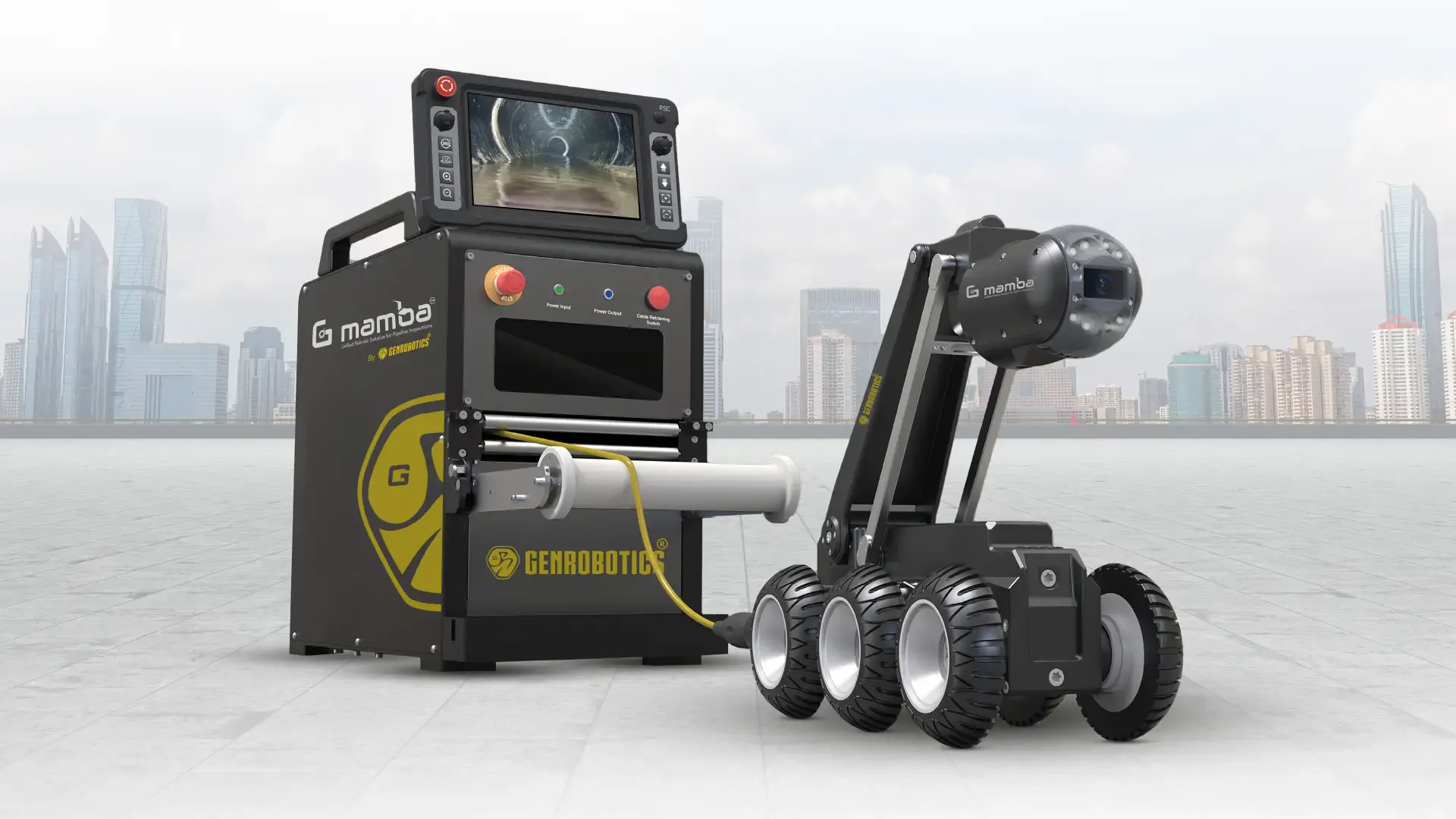
A refinery shutdown often begins with something invisible. A corroded pipeline. A microfracture inside a storage tank. An overheating electrical component hidden inside a complex industrial system. By the time these failures become visible, the consequences are rarely small. Production stops, financial losses escalate, environmental risks emerge, and in some cases, human lives are placed in danger. For decades, industrial inspection has largely been a reactive discipline. Industries built systems to detect problems, but many of those systems depended heavily on human accessibility, manual inspections, and periodic interventions. The challenge was never a lack of intent. It was the sheer complexity of industrial environments themselves. Today, that equation is beginning to change. Industrial inspection robots are not merely introducing automation into maintenance practices. They are fundamentally altering how industries perceive infrastructure, risk, and operational resilience. Across sectors, machines are increasingly becoming the eyes and ears of critical assets, entering spaces that are difficult, dangerous, or simply impossible for humans to inspect consistently. The implications extend far beyond efficiency. They point toward an entirely new philosophy of industrial operations.
From Scheduled Maintenance to Continuous Awareness
Traditional inspection systems were built around intervals.
Equipment would be inspected after a predefined period or following an operational event. While this approach helped establish maintenance discipline, it often created significant blind spots. Infrastructure deterioration rarely adheres to schedules.
A pipeline does not wait for an annual inspection to develop corrosion. Structural fatigue does not emerge according to maintenance calendars.
Industrial inspection robots are changing this paradigm by enabling continuous, real-time visibility into operational conditions. Equipped with advanced sensors, thermal imaging systems, computer vision, and AI-assisted analytics, these machines can navigate complex environments and identify anomalies before they evolve into critical failures.
Yet the real significance lies elsewhere.
The transition from periodic inspection to persistent situational awareness represents a fundamental shift in industrial thinking. Maintenance is gradually evolving from a corrective function into an intelligence-driven capability.
Industries are no longer asking, “Has something gone wrong?”
They are increasingly asking, “What early signals are we missing?”
Why the Most Hazardous Spaces Are Becoming Robotics Frontiers
Industrial ecosystems contain environments that challenge even the most experienced professionals.
Confined spaces, underground utility networks, high-temperature facilities, chemical processing units, offshore platforms, and elevated infrastructure all present significant operational risks. Despite rigorous safety protocols, inspection activities in these environments often expose workers to conditions that remain inherently hazardous.
This is where the conversation becomes more important.
The adoption of inspection robotics is as much about human dignity and safety as it is about technology deployment.
A crawling robot entering a corroded pipeline, a climbing robot inspecting an industrial chimney, or an autonomous system navigating underground infrastructure is performing a task that historically demanded human exposure to danger.
In this sense, industrial inspection robots are not replacing human expertise.
They are redefining where human expertise should be applied.
Professionals can increasingly transition from performing high-risk physical inspections toward analyzing data, making strategic decisions, and managing complex industrial systems.
This shift represents one of the most meaningful dimensions of industrial robotics: technology assuming risk so that people can focus on judgment.
The Rise of Cross-Industry Inspection Intelligence
One of the most fascinating developments in industrial inspection robotics is its remarkable adaptability.
The same foundational technologies are finding applications across sectors that appear entirely unrelated.
In oil and gas operations, robotic systems inspect pipelines, storage tanks, and remote infrastructure. In manufacturing facilities, autonomous platforms monitor machinery health and production equipment. Energy utilities deploy inspection robots to assess transmission networks and critical electrical assets. Mining environments increasingly rely on robotic systems to inspect inaccessible tunnels and hazardous operational zones.
Public infrastructure is also becoming an important frontier.
Bridges, water systems, sewer networks, transportation corridors, and urban utility infrastructure demand regular inspection at scales that are becoming increasingly difficult to manage through conventional approaches.
The larger shift is that inspection robotics is evolving into an infrastructure intelligence layer.
Industries are moving beyond simply inspecting assets. They are building continuously observable environments where information flows more reliably and decisions become increasingly predictive.
Building Resilience in an Age of Infrastructure Complexity
Modern infrastructure systems are becoming extraordinarily interconnected.
A disruption inside one industrial node can cascade across supply chains, impact public services, and generate economic consequences that extend well beyond a single facility.
The past few years have highlighted the importance of resilience as a strategic capability rather than an operational aspiration. Industries around the world are investing in predictive maintenance, digital twins, and intelligent asset management systems precisely because infrastructure reliability now influences economic competitiveness.
Industrial inspection robots occupy a crucial position within this transformation.
By generating high-quality, real-time inspection data, these systems strengthen decision-making capabilities across organizations. Maintenance planning becomes more precise. Asset life cycles become more predictable. Operational interruptions become increasingly preventable.
But perhaps the most valuable outcome is confidence.
Reliable infrastructure is built not merely on engineering excellence but on visibility. Organizations that understand the condition of their assets in real time are fundamentally better positioned to respond to uncertainty.
Why Emerging Economies Could Define the Next Phase of Inspection Robotics
Global robotics leadership has often been associated with manufacturing sophistication and industrial automation.
Yet a different opportunity is emerging.
Many developing economies face enormous infrastructure management challenges. Rapid urbanization, aging utility systems, expanding industrial capacity, and workforce safety concerns are creating conditions where inspection robotics can deliver exceptional public and industrial value.
This may become one of the defining characteristics of the next robotics era.
Some nations built robotics leadership through industrial productivity.
Others may build it through infrastructure transformation and public-impact innovation.
As industries seek safer, more intelligent ways to manage increasingly complex assets, deployment experience will matter as much as technological capability. The organizations shaping the future of industrial inspection will likely be those that understand not only robotics engineering but also the realities of operating within demanding industrial environments and public infrastructure systems.
Because inspection, ultimately, is about more than finding defects.
It is about understanding systems before they fail.
The Quiet Revolution Industries Cannot Afford to Ignore
Industrial inspection robots rarely attract the attention reserved for humanoid machines or consumer technologies.
Their work often happens underground, inside confined spaces, on remote industrial assets, and within environments most people never see.
Yet they may become some of the most consequential machines of our time.
Every inspection completed without human exposure to danger, every failure detected before disruption occurs, and every infrastructure asset that remains reliable because of continuous monitoring contributes to something larger than operational efficiency.
It contributes to safer industries, more resilient infrastructure, and societies that increasingly use technology to protect both people and essential systems.
The future of industrial inspection is therefore not simply a story about machines performing inspections.
It is the story of industries learning to see themselves more clearly—and building a world where visibility itself becomes one of the most valuable forms of resilience.
Related Blogs

Hazardous-Environment Robotics: Where Physical AI Meets India's Sanitation and Refinery Safety Crisis
At the India AI Impact Summit 2026 in New Delhi, EY India demonstrated “Scout,” a companion robot combining digital twins, robotics, and physical AI to help refinery workers track hazardous pipeline alerts that overwhelm small monitoring teams. It's a compelling demo. But in India, this isn't a preview of the future — it's already a deployed industry, with a body count that makes the case for it.

India’s Robotics Revolution: Innovation Beyond Software
For much of the past two decades, India's innovation story has been synonymous with software. The country became a global technology powerhouse by building expertise in IT services, digital platforms, and enterprise software. That legacy remains a remarkable achievement, but a quieter transformation is now taking shape—one driven not by code alone, but by machines capable of interacting with the physical world. This shift marks the rise of next-generation robotics, where engineering, artificial intelligence, advanced electronics, and intelligent sensing converge to solve problems that software alone cannot address. As industries modernise and infrastructure grows more complex, India's next wave of innovation is increasingly being built in laboratories, manufacturing facilities, and robotics research centres.

Scaling Deep-Tech Innovation: From Research to Commercialisation
Brilliant engineering ideas rarely fail because they lack technical merit. More often, they struggle to cross the difficult bridge between laboratory success and large-scale deployment. Building a working prototype is an achievement. Transforming that prototype into a reliable product that industries trust, regulators approve, and customers adopt is an entirely different challenge. This transition is where every deep tech startup is tested. Unlike software ventures that can iterate rapidly with minimal physical constraints, deep-tech companies must navigate complex engineering, manufacturing, certification, funding, and market adoption simultaneously. As India strengthens its innovation ecosystem, the ability to commercialise advanced technologies may become just as important as inventing them.