
Indigenous Robotics Innovation in India’s Future
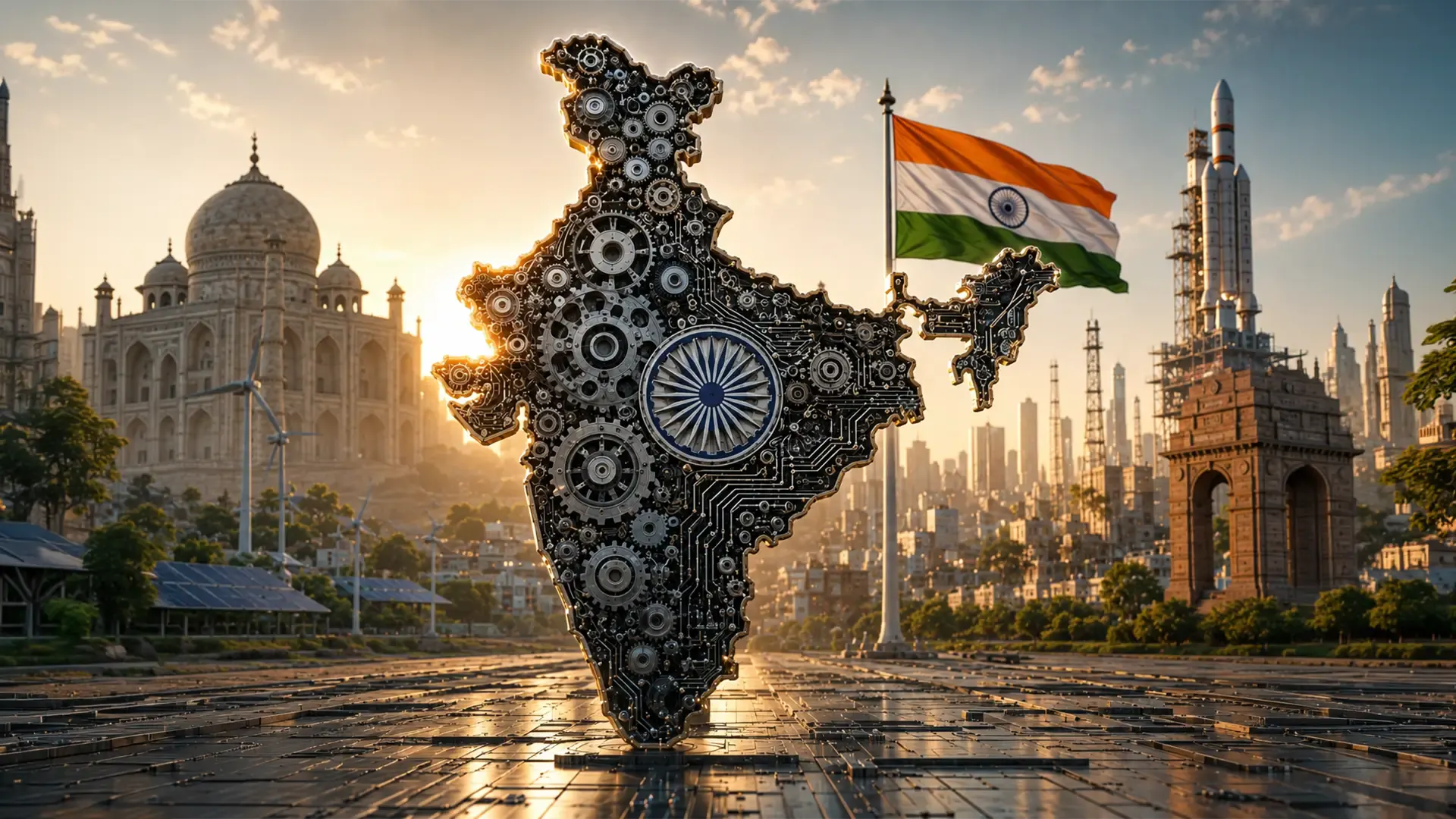
For nearly three decades, India’s rise as a technology power was defined largely through software, digital services, and information infrastructure. That success transformed the country’s global economic position and reshaped how the world viewed Indian innovation. But a different technological transition is now beginning to unfold. Across industries, governments, and public systems, the global conversation is moving from digital intelligence toward physical intelligence. Machines are no longer confined to factory automation alone. Robotics is entering healthcare, sanitation, logistics, infrastructure, agriculture, defence, mobility, and disaster response at an unprecedented scale. This shift carries enormous geopolitical significance. The countries that lead the next phase of robotics innovation may ultimately shape not only industrial competitiveness, but also public infrastructure resilience, healthcare accessibility, labour transformation, and strategic technological sovereignty. And this is where the conversation around indigenous robotics innovation becomes profoundly important for India. Because the future of robotics in India cannot simply depend on imported systems designed for entirely different economic, social, and infrastructural realities. The larger question is no longer whether India should participate in robotics innovation. The real question is whether India can build a distinctly Indian robotics ecosystem capable of solving large scale public challenges while shaping the future of global deep tech itself.
Why Indigenous Robotics Matters Beyond Manufacturing
For years, robotics discussions in India remained narrowly associated with industrial automation and manufacturing productivity. That understanding now feels incomplete.
The implications of robotics extend far beyond factory floors.
In emerging economies, robotics increasingly intersects with healthcare access, sanitation safety, urban infrastructure, agriculture modernization, disaster management, and workforce transformation. These are not isolated technical sectors. They are foundational public systems that shape quality of life itself.
Yet most global robotics systems are developed for high income environments with vastly different labour structures, infrastructure conditions, and deployment economics.
This creates a critical gap.
Solutions optimized for advanced industrial economies may not always translate effectively into dense urban settlements, resource constrained healthcare systems, or large scale public infrastructure environments found across developing nations.
This is where indigenous innovation becomes strategically indispensable.
India’s robotics future will likely depend on technologies designed around affordability, adaptability, scalability, and social impact rather than technological sophistication alone.
Japan built robotics leadership through industrial precision. India may build robotics leadership through public impact innovation.
That distinction could redefine global robotics priorities in the coming decades.
The Public Infrastructure Opportunity Few Nations Truly Understand
Some of the most meaningful opportunities for Indian robotics innovation lie not in consumer markets, but in public systems historically underserved by advanced technology.
Urban sanitation offers one of the clearest examples.
Across many cities, sewer maintenance and hazardous sanitation work continue exposing workers to unacceptable risks despite decades of policy attention. Mechanized sanitation systems and robotic sewer technologies are gradually beginning to change this reality.
But the larger significance lies elsewhere.
When robotics enters sanitation infrastructure, it transforms more than operational efficiency. It alters the relationship between labour, dignity, governance, and public health.
This is why certain Indian deep tech companies working in sanitation robotics have attracted global attention. Their innovations are not merely automation products. They represent technology designed around human safety and social transformation.
The implications extend far beyond sanitation.
Healthcare rehabilitation robotics presents another equally important frontier. As neurological disorders, stroke recovery needs, and ageing populations increase, countries are confronting severe shortages in long term rehabilitation infrastructure. Intelligent rehabilitation systems, robotic therapy platforms, and assistive technologies could fundamentally reshape recovery access in resource constrained environments.
This creates an extraordinary strategic opportunity.
India is uniquely positioned to develop robotics systems optimized not just for premium institutions, but for scalable public deployment across healthcare and infrastructure ecosystems.
Why the Global Robotics Market Is Entering a New Phase
The worldwide robotics market is evolving rapidly.
Industry estimates suggest that the global robotics economy could exceed several hundred billion dollars over the next decade, driven by healthcare robotics, service automation, infrastructure technologies, AI enabled systems, and intelligent urban operations.
Yet the most important transformation may not be technological alone.
The market itself is changing philosophically.
Earlier waves of robotics focused heavily on industrial optimization. The next generation of robotics is increasingly centered around societal resilience. Healthcare systems, ageing populations, climate adaptation, sanitation infrastructure, and labour safety are becoming central drivers of innovation.
This shift creates a strategic opening for countries capable of building socially relevant robotics ecosystems.
And perhaps nowhere is this opportunity more important than in India.
The country combines engineering talent, software capability, public digital infrastructure experience, manufacturing ambition, and large scale deployment environments unlike almost anywhere else in the world.
But technological capability alone will not be enough.
Building a Robotics Ecosystem Requires Institutional Vision
Successful robotics ecosystems are not created through isolated startups alone.
They emerge through long term alignment between policy frameworks, research institutions, capital ecosystems, manufacturing networks, skilling systems, and public procurement structures.
This is where the conversation becomes more important.
If India seeks genuine robotics leadership, the country must move beyond viewing robotics purely as a private sector innovation category. Robotics increasingly belongs within national infrastructure strategy itself.
Forward looking robotics ecosystems require:
- Public investment in deep tech research
- Robotics focused skilling programs
- University industry collaboration
- Healthcare and municipal deployment frameworks
- Indigenous component manufacturing capabilities
- Regulatory support for public technology deployment
- Long term procurement visibility for startups
The implications extend far beyond economic growth.
Nations that fail to develop indigenous robotics ecosystems may eventually become dependent on imported intelligent infrastructure systems controlling critical public functions.
That dependency carries strategic risks in healthcare, logistics, defence, urban governance, and infrastructure management.
Technological sovereignty therefore becomes deeply intertwined with robotics capability.
Human Centered Robotics Could Become India’s Defining Advantage
Perhaps the most important question is not whether India can compete in robotics.
It is whether India can redefine what robotics leadership itself means.
Much of the world’s robotics innovation emerged from industrial priorities. India’s most meaningful contributions may emerge from public impact priorities instead.
That difference matters profoundly.
When robotics is developed around sanitation worker safety, accessible rehabilitation, affordable healthcare systems, climate resilience, agricultural productivity, or disaster response, innovation becomes deeply human centered.
This creates a distinctly different technological philosophy.
The future of robotics may ultimately belong not only to nations building the most advanced machines, but to those building the most socially meaningful systems.
And this is where Indian innovation holds extraordinary potential.
Because the country’s greatest technological challenges are also some of humanity’s largest public infrastructure challenges.
The Future of Indian Robotics Will Shape More Than Industry
A deeper transformation is already beginning to take shape.
Robotics is gradually moving from an industrial technology category into a civilizational infrastructure layer. It will influence healthcare accessibility, urban governance, labour systems, environmental resilience, and national productivity simultaneously.
That transition changes everything.
The future of indigenous robotics innovation in India is therefore not simply about economic competitiveness. It is about determining whether emerging technologies strengthen inclusion or deepen inequality.
It is about whether public systems become safer, more accessible, and more humane.
And perhaps most importantly, it is about whether India can build a technology ecosystem rooted not only in intelligence, but also in dignity.
Because the next global technology leader may not be the country building the most machines.
It may be the country building technologies capable of solving the most human problems.
Related Blogs

Hazardous-Environment Robotics: Where Physical AI Meets India's Sanitation and Refinery Safety Crisis
At the India AI Impact Summit 2026 in New Delhi, EY India demonstrated “Scout,” a companion robot combining digital twins, robotics, and physical AI to help refinery workers track hazardous pipeline alerts that overwhelm small monitoring teams. It's a compelling demo. But in India, this isn't a preview of the future — it's already a deployed industry, with a body count that makes the case for it.

India’s Robotics Revolution: Innovation Beyond Software
For much of the past two decades, India's innovation story has been synonymous with software. The country became a global technology powerhouse by building expertise in IT services, digital platforms, and enterprise software. That legacy remains a remarkable achievement, but a quieter transformation is now taking shape—one driven not by code alone, but by machines capable of interacting with the physical world. This shift marks the rise of next-generation robotics, where engineering, artificial intelligence, advanced electronics, and intelligent sensing converge to solve problems that software alone cannot address. As industries modernise and infrastructure grows more complex, India's next wave of innovation is increasingly being built in laboratories, manufacturing facilities, and robotics research centres.

Scaling Deep-Tech Innovation: From Research to Commercialisation
Brilliant engineering ideas rarely fail because they lack technical merit. More often, they struggle to cross the difficult bridge between laboratory success and large-scale deployment. Building a working prototype is an achievement. Transforming that prototype into a reliable product that industries trust, regulators approve, and customers adopt is an entirely different challenge. This transition is where every deep tech startup is tested. Unlike software ventures that can iterate rapidly with minimal physical constraints, deep-tech companies must navigate complex engineering, manufacturing, certification, funding, and market adoption simultaneously. As India strengthens its innovation ecosystem, the ability to commercialise advanced technologies may become just as important as inventing them.