
The Next Decade of Robotics in India, From Industry to Medical and Rehabilitation Technologies
Robotics is undergoing a global transformation, evolving from mechanical tools to intelligent collaborators that build, assist, and heal. What began as industrial automation has now entered hospitals, rehabilitation centers, and clinical environments.
Introduction: A New Age of Intelligent Machines
Robotics is undergoing a global transformation, evolving from mechanical tools to intelligent collaborators that build, assist, and heal. What began as industrial automation has now entered hospitals, rehabilitation centers, and clinical environments.
India, long recognized as an IT powerhouse, is rapidly emerging as a deep tech leader in medical robotics, especially in robotic rehabilitation. Companies like Genrobotics are driving this shift by combining advanced engineering with human centered innovations. Over the next decade, robotics in India will not only build factories but also restore mobility, accelerate recovery, and redefine healthcare outcomes.
The Robotics Revolution: Global Momentum Meets Healthcare Need
The global robotics industry, valued at USD 45 billion in 2023, is projected to exceed USD 150 billion by 2032. While industrial robots remain strong, the fastest growing segment is medical robotics, particularly rehabilitation robots for stroke, spinal injuries, and neuromotor disorders.
Key areas of growth include:
- Robotic Surgery: AI assisted precision procedures
- Rehabilitation Robotics: Gait trainers, exoskeletons, and neuro rehab systems
- Assistive Robots: Elderly support and mobility assistance
- Clinical Automation: Safer and more efficient hospital operations
The convergence of AI, biomechanics, control systems, and sensors is enabling robots to adapt to human movement and support faster recovery.
Why India Is Poised for a Medical Robotics Boom
- Rising Healthcare Demand
India records more than 1.8 million new stroke cases every year, making mobility impairment one of the most common long term disabilities in the country.
- Deep Tech Engineering Talent
India produces millions of engineers annually, strengthening its capabilities in robotics, AI, and biomechatronics.
- Supportive Policy Landscape
Initiatives like Digital India, Make in India, and the Deep Tech Policy 2025 are strengthening innovation in medical technology and rehabilitation devices.
- Global Supply Chain Momentum
As global healthcare demands rise, India is becoming a cost effective robotics manufacturing hub.
All these factors position India to become a significant force in medical and rehabilitation robotics.
From Industry to Healthcare: The Expanding Role of Robotics
Industrial robotics introduced precision, consistency, and safety to manufacturing. These same capabilities are now redefining medical rehabilitation. Technologies once used in production environments are being adapted into patient safe, therapist supported devices that deliver standardized and high quality therapy.
This shift marks a new era where robotics enhances not just productivity but human recovery
Medical Robotics: Transforming the Way India Heals
Surgical Robotics
Minimally invasive robotic systems improve precision and reduce recovery time. Indian companies are now working on accessible, indigenous solutions.
Rehabilitation Robotics – The Fastest Growing Segment
Traditional physiotherapy, though effective, is often limited by therapist fatigue, inconsistent intensity, and subjective assessment.
Rehabilitation robots provide:
- Standardized therapy
- High repetition movement cycles
- Measurable outcomes
- Adjustable assistance
Assistive and Mobility Robots
With India’s elderly population nearing 200 million by 2030, robotics based mobility support will soon become essential.
Genrobotics: India’s Pioneer in Rehabilitation Robotics
Well known for the Bandicoot robot, Genrobotics has expanded its mission to healthcare with a focus on restoring mobility and improving quality of life.
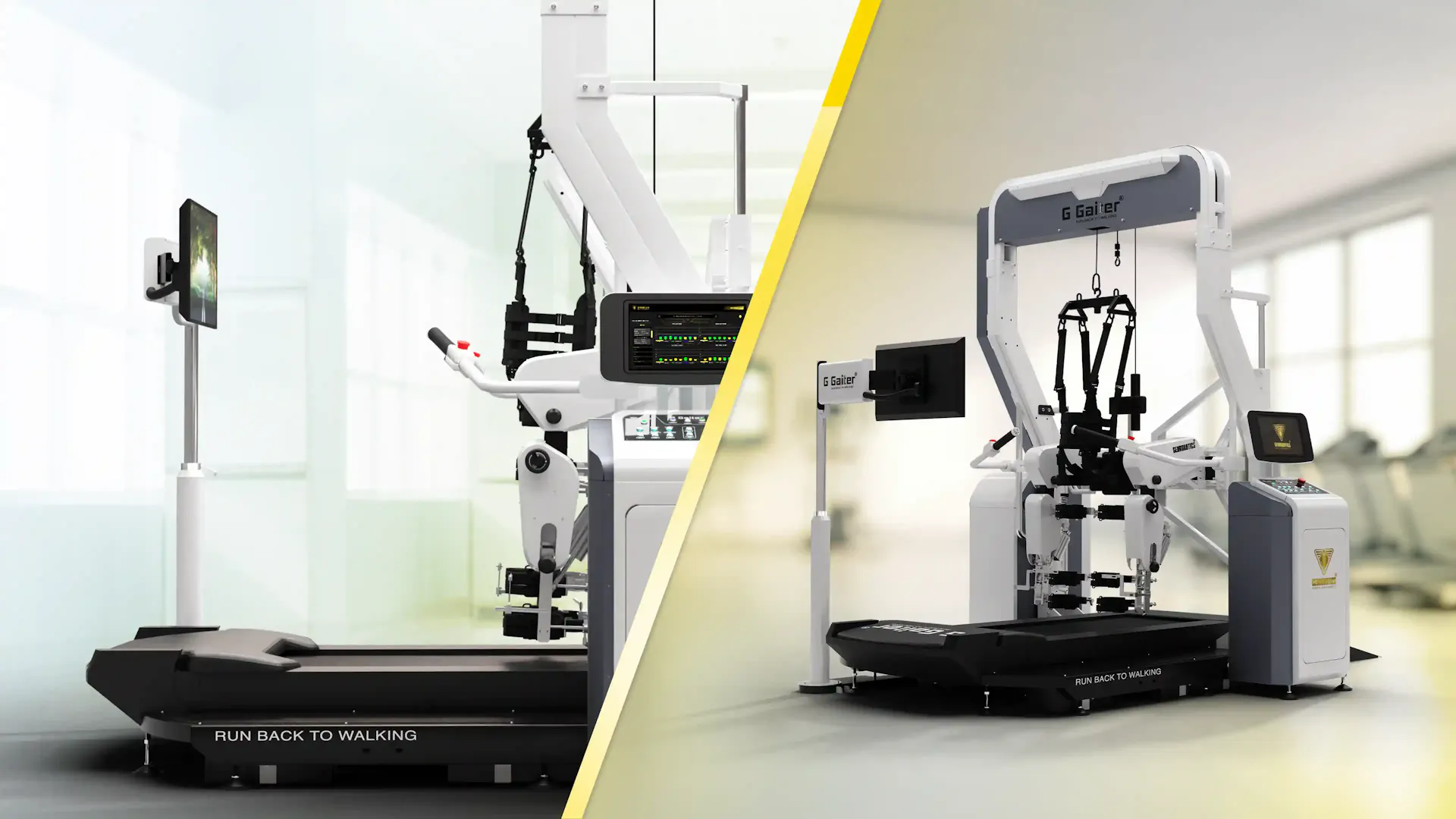
Introducing G Gaiter – India’s Next Generation Robotic Gait Trainer
G Gaiter supports early mobility and gait restoration for individuals recovering from:
- Stroke
- Spinal cord injuries
- Traumatic brain injuries
- Cerebral palsy
- Orthopedic conditions
- Neuromuscular disorders
Key Features of G Gaiter
- Adaptive Gait Assistance
- Natural Gait Simulation: Enhances neuroplasticity
- Therapist Controlled Precision
- Real Time Movement Analytics
- High Repetition Therapy
A Philosophy Rooted in Humanity
Genrobotics follows one core principle:
“If a task impacts human safety, dignity, or recovery, robotics must elevate it.”
The Convergence: Industry 4.0 Powering Health 4.0
The future of rehabilitation robotics lies in the fusion of industrial intelligence and medical empathy:
- AI models originally built for precision now support gait adaptation rather than prediction
- Safe robot human interaction inspires rehabilitation safe robotic devices
- Industrial sensor intelligence enhances movement tracking
- Analytics platforms enable personalized therapy
The Ecosystem Behind India’s Robotics Rise
- Policy Support
PLI schemes and upcoming deep tech policies encourage domestic development and global partnerships.
- Investor Confidence
Government programs like TIDE 2.0 and private investors are increasingly supporting innovation in medical and rehabilitation robotics.
India’s Global Role: Expanding Access to Rehabilitation Technology
Demand for affordable rehabilitation robots is growing worldwide. India is positioned to become a leading provider of:
- Gait training systems
- Rehabilitation robots
- Exoskeleton devices
- Neuro rehabilitation solutions
- AI supported therapy technologies
India is emerging as a strong and competitive contributor to the global rehabilitation robotics landscape, supported by scalable innovations like G Gaiter.
The Human Element: Recovery with Dignity
Robots do not replace physiotherapists they empower them.
Therapists gain:
- Reduced physical strain
- Higher consistency
- Objective insights
- Ability to serve more patients
Patients gain:
- Faster recovery
- Improved gait symmetry
- Higher motivation
- Safer therapy environments
Robots add precision.
Humans add empathy.
Together, they create better recovery outcomes.
The Decade Ahead: What India Will See by 2035
By 2035, rehabilitation robotics will be mainstream across India.
Expected developments include:
- AI enabled rehabilitation systems
- Affordable gait trainers across Tier 2 and Tier 3 cities
- VR integrated therapy suites
- Real time, personalized treatment plans
- Human robot collaborative rehabilitation
Conclusion
India is stepping into a deep tech era where robotics will reshape the future of healthcare. With innovations like G Gaiter, the country is not just adopting medical robotics but contributing meaningfully to global progress in rehabilitation. Genrobotics’ journey from sanitation robotics to healthcare innovation reflects a powerful message: when engineering serves humanity, robots do not replace capability they help restore it. As robotic rehabilitation becomes more accessible across India, millions will gain the opportunity to walk, move, and live with dignity again.
Related Blogs

Extreme Environment Robotics in India Explained
When we think about robotics, we often picture controlled environments and predictable systems. But in India, robotics is evolving in places that are anything but controlled.

Guide to Building a Robotics Startup in India
India’s innovation landscape is undergoing a quiet but powerful transformation. For years, the startup ecosystem was dominated by software platforms and consumer applications. Today, a new wave of founders is building technologies that interact with the physical world.

How PMR Robotics and the G Gaiter Are Redefining Precision Healthcare in India
Traditional physiotherapy and manual rehabilitation infrastructure often struggle to meet this surge especially in semi‑urban and rural areas.