
Computer Vision in Industrial Inspections: Benefits and Future
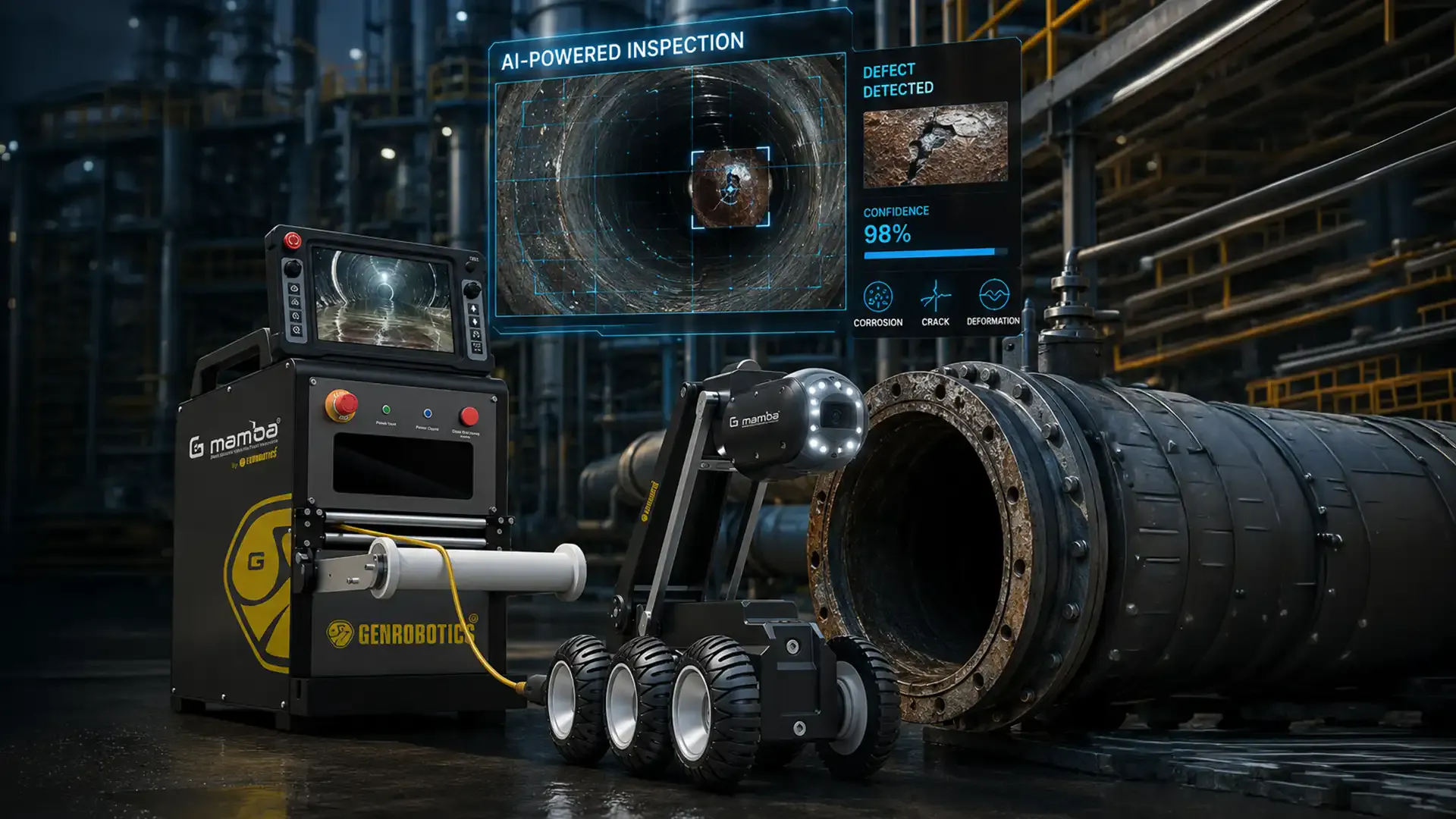
A refinery shutdown often begins with something no one notices. A hairline crack inside a storage tank. Corrosion gradually weakening a pipeline. A temperature anomaly in an electrical component hidden within a complex industrial system. For weeks or months, these defects remain undetected, quietly accumulating risk. Then production stops. The financial consequences can be staggering. But costs are only one part of the equation. Environmental damage, safety incidents, regulatory violations, and threats to human life frequently follow. Industrial inspections have traditionally been designed around this challenge. Yet for decades, inspections themselves have faced limitations. Human inspectors can only see so much, access so many locations, and process finite amounts of information. This is precisely where computer vision is beginning to redefine industrial intelligence. The technology is not merely helping industries see better. It is fundamentally changing how industries perceive risk, understand infrastructure health, and make decisions about safety. And the implications extend far beyond efficiency.
From Periodic Inspection to Continuous Awareness
Most industrial assets are inspected periodically.
A team visits a site, records observations, analyses visible defects, and generates reports. The process has served industries reasonably well for decades. Yet it is inherently reactive.
Defects continue evolving between inspection cycles. Minor anomalies can escalate into major operational issues before the next scheduled assessment.
Computer vision introduces an entirely different model.
By enabling machines to capture, interpret, and analyse visual information in real time, industrial inspections are gradually moving from episodic observation to continuous awareness.
Cameras, intelligent sensors, and autonomous robotic platforms can identify corrosion patterns, detect structural changes, recognise equipment abnormalities, and monitor asset conditions with remarkable consistency.
But the larger shift is philosophical.
Industries are beginning to transition from asking, “What has already gone wrong?” to asking, “What early signs of failure are emerging?”
That difference fundamentally changes risk management.
Seeing What Humans Can Easily Miss
Industrial environments are extraordinarily complex.
Storage tanks, confined spaces, pipelines, offshore platforms, chemical processing facilities, and underground infrastructure present inspection challenges that often exceed human limitations.
Fatigue affects attention. Hazardous environments restrict access. Subtle anomalies may escape even highly experienced professionals.
Computer vision does not replace expertise. Instead, it augments it.
Advanced visual systems excel at recognising patterns that may be difficult to detect consistently through manual observation. Tiny structural changes, surface deterioration, thermal variations, and abnormal visual signatures can be identified, classified, and prioritised for human review.
This is where the conversation becomes more important.
Inspection quality no longer depends entirely on human memory or visual endurance. It increasingly relies on collaborative intelligence, where machines continuously observe and people apply contextual judgment.
The result is not less human involvement.
It is more informed human decision-making.
Safety Begins Long Before an Incident Occurs
Industrial safety is often discussed in terms of emergency response.
Yet the most effective safety interventions happen long before emergencies arise.
A leak prevented.
A weakened structure identified.
A hazardous area assessed remotely rather than physically entered.
Computer vision is proving particularly valuable in this preventive dimension of industrial safety.
Inspection robots equipped with visual intelligence can enter confined spaces, navigate complex infrastructure, and assess environments that may expose workers to toxic gases, extreme temperatures, or structural hazards.
The significance of this transition is profound.
Every time an intelligent inspection system enters a dangerous environment instead of a worker, technology becomes an instrument of human protection.
The objective is no longer simply to inspect assets.
It is to preserve lives while improving operational understanding.
As industries increasingly prioritise worker well-being, technologies that remove unnecessary exposure to hazardous environments become more than operational tools. They become expressions of responsible industrial progress.
Building Infrastructure That Can Observe Itself
For much of industrial history, infrastructure remained largely passive.
Pipelines transported materials. Storage tanks stored chemicals. Facilities performed designated functions. Problems became apparent only when people physically identified them.
The next generation of industrial infrastructure is becoming fundamentally different.
Assets are gradually evolving into systems capable of continuous observation.
Computer vision, combined with robotics, sensor networks, and artificial intelligence, enables infrastructure to generate visual intelligence about its own condition. Corrosion can be tracked over time. Structural changes can be documented continuously. Maintenance decisions can increasingly be informed by actual asset health rather than assumptions.
Yet the real significance lies elsewhere.
Industrial infrastructure is becoming increasingly predictive.
The ability to identify emerging issues before they become failures has profound implications for operational continuity, sustainability, and public safety.
Downtime decreases.
Maintenance becomes more strategic.
Critical infrastructure becomes more resilient.
And industries gain something particularly valuable: foresight.
The Human Side of Visual Intelligence
Discussions surrounding computer vision often focus on algorithms and analytics.
Yet the human implications deserve equal attention.
Industrial inspections are frequently performed under physically demanding and psychologically stressful conditions. Workers may spend long hours in challenging environments, carrying significant responsibility for identifying safety risks.
Visual intelligence technologies have the potential to reshape this experience.
Remote inspections reduce hazardous exposure. Automated anomaly detection decreases cognitive burden. Data-driven assessments support more confident decision-making.
Perhaps most importantly, workers are increasingly transitioning from routine observation tasks toward higher-value analytical responsibilities.
This evolution reflects a broader transformation underway across industries.
The future workforce will likely spend less time searching for information and more time interpreting it.
Technology handles observation at scale.
People provide judgment, context, and action.
The relationship between humans and machines becomes complementary rather than competitive.
The Future of Industrial Inspections Will Be Defined by Intelligence
Industrial inspections are entering a new era.
The next decade will not simply be characterised by better cameras or faster computing systems. It will be defined by the convergence of computer vision, autonomous robotics, artificial intelligence, and connected industrial ecosystems.
Inspection systems will become increasingly predictive. Infrastructure monitoring will become continuous. Risk assessments will become more proactive.
But perhaps the most important transformation is conceptual.
For centuries, industries have largely depended on human beings to search for hidden failures.
The emerging generation of visual intelligence systems reverses this relationship.
Infrastructure itself begins to communicate.
Machines continuously observe.
Risks become visible earlier.
Decisions become more informed.
And people are increasingly protected from both uncertainty and unnecessary exposure.
In many ways, computer vision is giving industries something they have never fully possessed before: the ability to see emerging risks before they become crises.
In industrial environments where the invisible often determines the future, that capability may prove to be one of the most consequential technological shifts of our time.
Related Blogs

Hazardous-Environment Robotics: Where Physical AI Meets India's Sanitation and Refinery Safety Crisis
At the India AI Impact Summit 2026 in New Delhi, EY India demonstrated “Scout,” a companion robot combining digital twins, robotics, and physical AI to help refinery workers track hazardous pipeline alerts that overwhelm small monitoring teams. It's a compelling demo. But in India, this isn't a preview of the future — it's already a deployed industry, with a body count that makes the case for it.

India’s Robotics Revolution: Innovation Beyond Software
For much of the past two decades, India's innovation story has been synonymous with software. The country became a global technology powerhouse by building expertise in IT services, digital platforms, and enterprise software. That legacy remains a remarkable achievement, but a quieter transformation is now taking shape—one driven not by code alone, but by machines capable of interacting with the physical world. This shift marks the rise of next-generation robotics, where engineering, artificial intelligence, advanced electronics, and intelligent sensing converge to solve problems that software alone cannot address. As industries modernise and infrastructure grows more complex, India's next wave of innovation is increasingly being built in laboratories, manufacturing facilities, and robotics research centres.

Scaling Deep-Tech Innovation: From Research to Commercialisation
Brilliant engineering ideas rarely fail because they lack technical merit. More often, they struggle to cross the difficult bridge between laboratory success and large-scale deployment. Building a working prototype is an achievement. Transforming that prototype into a reliable product that industries trust, regulators approve, and customers adopt is an entirely different challenge. This transition is where every deep tech startup is tested. Unlike software ventures that can iterate rapidly with minimal physical constraints, deep-tech companies must navigate complex engineering, manufacturing, certification, funding, and market adoption simultaneously. As India strengthens its innovation ecosystem, the ability to commercialise advanced technologies may become just as important as inventing them.