
How Autonomous Robots Are Transforming Public Infrastructure
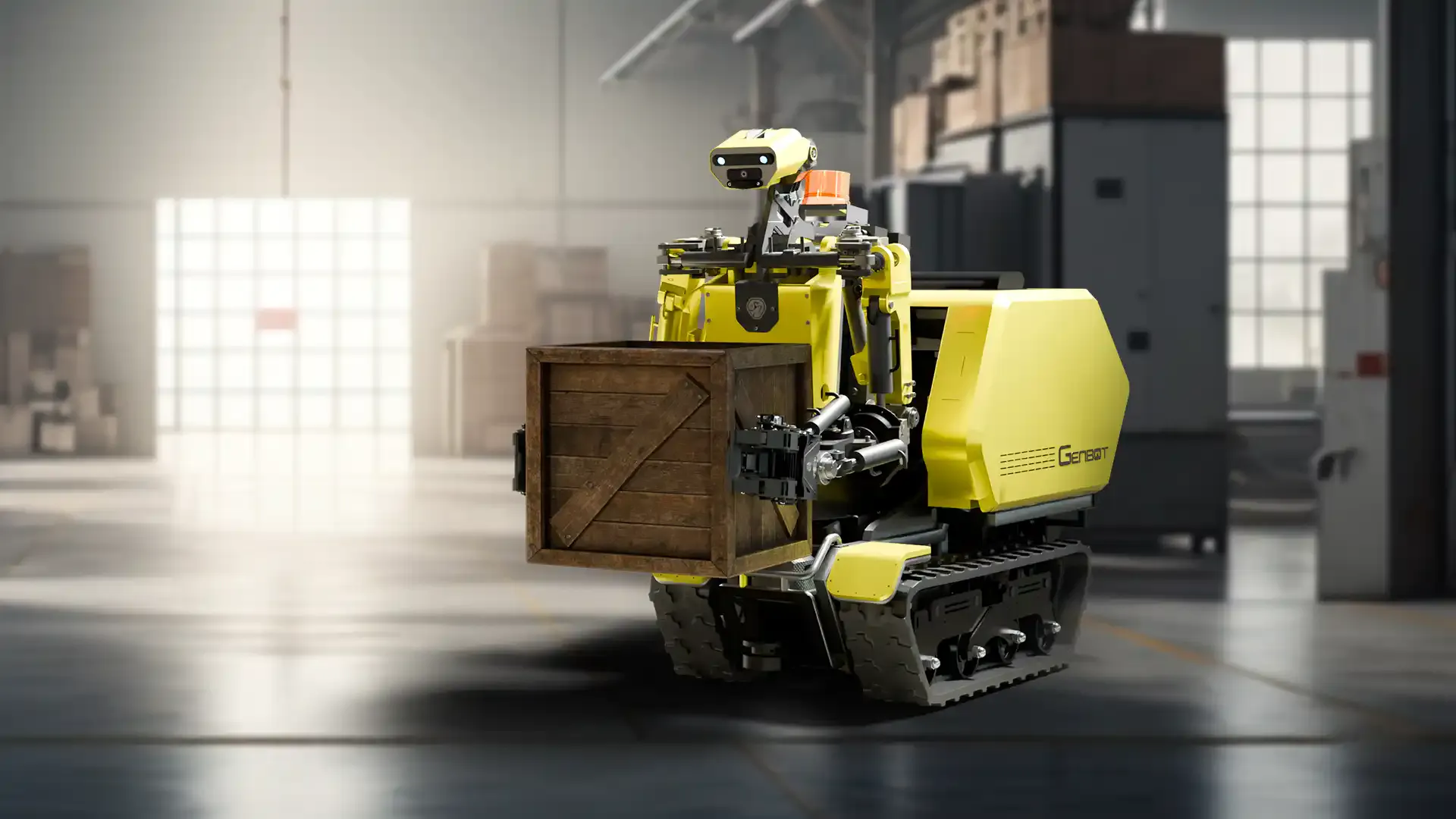
Urban infrastructure has entered an era where complexity is growing faster than conventional maintenance practices can keep pace. Cities are expanding, utility networks are ageing, and public agencies are expected to deliver safer, faster, and more sustainable services with limited resources. Against this backdrop, one trend is quietly reshaping how infrastructure is inspected and maintained: the rise of autonomous robotics. What was once considered experimental technology is steadily becoming an operational necessity. For every deep tech startup developing intelligent robotic systems, the goal is no longer simply to automate repetitive tasks. It is to enable infrastructure to become more responsive, data-driven, and resilient in an increasingly demanding urban landscape.
Why Public Infrastructure Needs a Different Kind of Innovation
Industrial automation has transformed factories by improving productivity, precision, and consistency. Public infrastructure, however, presents a different challenge.
Roads, sewer networks, drainage systems, bridges, utility corridors, and water pipelines operate in dynamic environments where conditions constantly change. Unlike controlled industrial settings, infrastructure assets face weather extremes, ageing materials, unpredictable loads, and limited accessibility.
Maintaining these systems efficiently requires more than scheduled inspections. It requires continuous awareness of infrastructure health.
This is where autonomous robotics is creating new possibilities.
For a modern deep tech startup, infrastructure is no longer viewed as static physical assets but as living systems that generate valuable operational intelligence.
What Makes a Robot Truly Autonomous?
Automation and autonomy are often used interchangeably, yet they represent different levels of capability.
An automated robot follows predefined instructions.
An autonomous robot observes its surroundings, interprets information, makes operational decisions within defined parameters, and adapts to changing conditions without requiring constant human intervention.
These systems combine multiple technologies, including:
- Artificial intelligence
- Computer vision
- Simultaneous Localization and Mapping (SLAM)
- LiDAR and depth sensing
- Edge computing
- Real-time environmental monitoring
- Advanced mobility platforms
Together, these technologies allow robots to navigate unfamiliar environments, identify obstacles, optimise inspection routes, and gather actionable infrastructure data.
The engineering challenge lies not simply in movement but in intelligent decision-making.
From Inspection to Infrastructure Intelligence
Historically, inspections have been periodic activities designed to identify existing problems.
Autonomous robotics changes that philosophy.
Instead of occasional observations, infrastructure managers gain continuous visibility into asset conditions.
An autonomous inspection robot can document structural defects, detect corrosion, identify sediment accumulation, monitor environmental conditions, and compare inspection results over time. Each inspection contributes to a growing digital record that supports predictive maintenance and long-term infrastructure planning.
For municipal authorities, this means maintenance decisions become increasingly evidence-based rather than reactive.
Infrastructure evolves from being repaired after failure to being managed throughout its lifecycle.
Safety Is Driving the Adoption Curve
One of the strongest arguments for autonomous robotics is worker safety.
Many public infrastructure assets exist in environments that expose personnel to confined spaces, hazardous gases, unstable surfaces, contaminated water, or difficult terrain.
Reducing direct human exposure has become a major engineering objective.
Autonomous robots can inspect hazardous environments remotely, collect operational data, and perform preliminary assessments before maintenance teams are deployed.
Rather than replacing skilled professionals, these systems enable engineers to make better-informed decisions while significantly reducing unnecessary risk.
This human-centred approach is becoming a defining characteristic of every successful deep tech startup working in industrial and public infrastructure robotics.
Data Is Becoming the Most Valuable Infrastructure Asset
Modern infrastructure generates enormous amounts of information.
Inspection images, environmental readings, equipment diagnostics, geographic information, maintenance records, and operational history all contribute to understanding asset performance.
The challenge is no longer collecting data.
It is extracting meaningful insights.
Autonomous robotic platforms increasingly integrate artificial intelligence to analyse inspection results, classify anomalies, identify recurring issues, and prioritise maintenance activities.
This transforms infrastructure management into a continuously improving feedback system.
Every inspection strengthens future decision-making.
Why Deep Tech Startups Are Leading This Transformation
Unlike conventional technology companies that primarily develop software applications, a deep tech startup builds solutions around fundamental scientific and engineering innovation.
Developing autonomous robots requires expertise across multiple disciplines:
- Mechanical engineering
- Embedded electronics
- Artificial intelligence
- Machine vision
- Control systems
- Sensor fusion
- Robotics software
- Industrial design
This convergence creates technologies that solve complex physical-world challenges rather than purely digital ones.
India's growing ecosystem of robotics innovators demonstrates how multidisciplinary engineering can produce globally relevant infrastructure solutions while addressing local operational challenges.
The Importance of Building for Real-World Conditions
Autonomous robots designed for public infrastructure cannot succeed through laboratory performance alone.
They must operate in environments that include uneven terrain, standing water, poor visibility, communication constraints, confined spaces, and changing weather conditions.
Engineering robustness therefore becomes just as important as technological sophistication.
Reliability, maintainability, cybersecurity, operational safety, and ease of deployment all influence whether autonomous systems deliver lasting value.
The most successful innovations are often those that simplify complex engineering for frontline operators rather than adding operational complexity.
Engineering Innovation That Solves Public Challenges
India's robotics ecosystem increasingly reflects this philosophy.
Companies such as Genrobotics demonstrate how indigenous engineering can address infrastructure challenges through intelligent robotic systems designed specifically for hazardous public environments. Their work illustrates how a deep tech startup can combine robotics, artificial intelligence, and practical engineering to improve worker safety while supporting smarter infrastructure management.
The significance extends beyond any single application.
It highlights how deep technology can create measurable public value by solving problems that conventional engineering approaches have struggled to address.
Autonomous Infrastructure Is Closer Than It Appears
Cities are already becoming more connected through intelligent transportation systems, digital governance platforms, and smart utility networks.
Autonomous robotics represents the next logical step in that evolution.
As inspection systems become increasingly intelligent, infrastructure itself becomes more observable, more predictable, and more resilient. Municipal authorities gain the ability to identify emerging problems before they disrupt public services, while engineering teams can focus their expertise where it creates the greatest impact.
For every deep tech startup working at the intersection of robotics and infrastructure, the opportunity extends far beyond automation. It is about creating public systems that continuously learn from their environments and improve over time.
The future of urban infrastructure may not be defined by the roads we build or the pipelines we install. It may be defined by the intelligent machines quietly monitoring them—turning invisible assets into visible insights and enabling cities to maintain critical infrastructure with greater safety, precision, and confidence than ever before.
Related Blogs

Hazardous-Environment Robotics: Where Physical AI Meets India's Sanitation and Refinery Safety Crisis
At the India AI Impact Summit 2026 in New Delhi, EY India demonstrated “Scout,” a companion robot combining digital twins, robotics, and physical AI to help refinery workers track hazardous pipeline alerts that overwhelm small monitoring teams. It's a compelling demo. But in India, this isn't a preview of the future — it's already a deployed industry, with a body count that makes the case for it.

India’s Robotics Revolution: Innovation Beyond Software
For much of the past two decades, India's innovation story has been synonymous with software. The country became a global technology powerhouse by building expertise in IT services, digital platforms, and enterprise software. That legacy remains a remarkable achievement, but a quieter transformation is now taking shape—one driven not by code alone, but by machines capable of interacting with the physical world. This shift marks the rise of next-generation robotics, where engineering, artificial intelligence, advanced electronics, and intelligent sensing converge to solve problems that software alone cannot address. As industries modernise and infrastructure grows more complex, India's next wave of innovation is increasingly being built in laboratories, manufacturing facilities, and robotics research centres.

Scaling Deep-Tech Innovation: From Research to Commercialisation
Brilliant engineering ideas rarely fail because they lack technical merit. More often, they struggle to cross the difficult bridge between laboratory success and large-scale deployment. Building a working prototype is an achievement. Transforming that prototype into a reliable product that industries trust, regulators approve, and customers adopt is an entirely different challenge. This transition is where every deep tech startup is tested. Unlike software ventures that can iterate rapidly with minimal physical constraints, deep-tech companies must navigate complex engineering, manufacturing, certification, funding, and market adoption simultaneously. As India strengthens its innovation ecosystem, the ability to commercialise advanced technologies may become just as important as inventing them.