
AI in Robotics: Transforming Industrial Automation
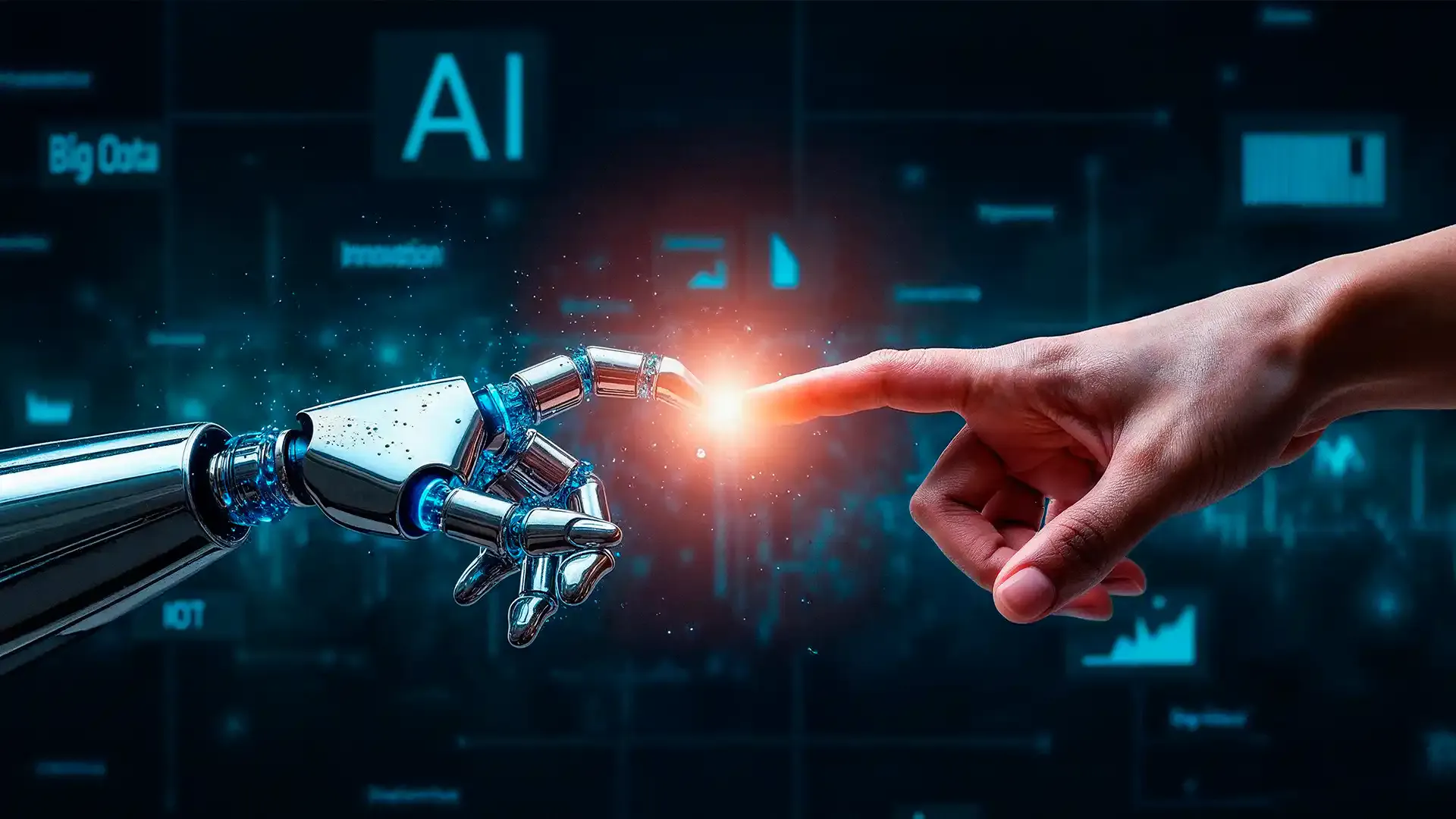
For years, industrial robotics was defined by precision, repetition, and predictability. A robot performed exactly what it had been programmed to do—nothing more, nothing less. That model worked well in controlled manufacturing environments, but today's infrastructure challenges are rarely predictable. Underground pipelines change conditions without warning, industrial facilities generate vast amounts of operational data, and hazardous environments demand split-second decision-making. This is where artificial intelligence is redefining robotics. The next wave of innovation is not about building machines that move faster; it is about building machines that perceive, analyse, and adapt. For every robotics startup India is producing, the integration of AI is becoming the defining factor that separates automation from intelligent autonomy.
Robotics Is Evolving Beyond Automation
Traditional industrial robots excel at repetitive tasks within structured environments.
Artificial intelligence expands those capabilities by enabling robots to interpret information, recognise patterns, and respond to changing conditions in real time.
Rather than simply executing commands, AI-enabled robots can process visual inputs, analyse sensor data, detect anomalies, and recommend operational actions based on what they observe.
This evolution is particularly significant for industries where environments cannot be fully controlled, including public infrastructure, utilities, mining, oil and gas, and wastewater management.
For a growing robotics startup India ecosystem, AI is no longer an optional feature. It is becoming a core engineering capability.
What Makes AI-Powered Robotics Different?
Artificial intelligence allows robots to combine multiple streams of information into meaningful operational insights.
Modern robotic systems may simultaneously analyse:
- High-definition video feeds
- Thermal imagery
- LiDAR scans
- Gas detection data
- Depth perception
- Equipment diagnostics
- Historical inspection records
Instead of presenting operators with raw information, AI algorithms identify patterns that indicate structural deterioration, equipment failure, corrosion, leaks, or abnormal operating conditions.
The robot becomes more than an inspection tool.
It becomes an intelligent decision-support system.
Industrial Safety Is Driving AI Adoption
One of the strongest applications of AI-powered robotics is improving workplace safety.
Many industrial environments expose personnel to confined spaces, toxic atmospheres, extreme temperatures, unstable structures, or hazardous materials. Traditionally, inspections in these environments relied heavily on experienced personnel entering potentially dangerous locations.
Artificial intelligence changes that equation.
Combined with advanced robotic platforms, AI enables remote inspection systems to recognise hazards before human intervention becomes necessary. Machine vision can detect defects that may be difficult to identify manually, while predictive algorithms estimate infrastructure degradation based on inspection history.
This is why every robotics startup transforming industrial safety increasingly focuses not only on mobility or hardware but also on intelligent software capable of supporting better operational decisions.
AI Is Making Predictive Maintenance Practical
Maintenance strategies are undergoing a fundamental transformation.
For decades, infrastructure maintenance followed two basic models: scheduled servicing or emergency repairs.
Artificial intelligence introduces a third approach—predictive maintenance.
By continuously analysing inspection data, AI identifies early indicators of equipment deterioration before failures occur.
Instead of asking, "What broke?", operators begin asking, "What is likely to fail next?"
For industries managing extensive physical assets, this approach delivers measurable benefits:
- Reduced unplanned downtime
- Lower maintenance costs
- Longer equipment lifespan
- Improved resource allocation
- Greater operational reliability
These advantages explain why the robotics startup India ecosystem increasingly integrates AI into industrial inspection platforms rather than treating it as a standalone technology.
Smarter Robots Create Better Infrastructure Intelligence
Infrastructure management depends on accurate information.
Every inspection generates thousands of images, measurements, and operational observations. Reviewing this information manually can be time-consuming and susceptible to human oversight.
Artificial intelligence accelerates this process by automatically classifying defects, comparing inspection results over time, and highlighting areas requiring engineering attention.
The value extends beyond operational efficiency.
Municipal authorities, industrial operators, and infrastructure managers gain access to consistent, data-driven assessments that support long-term planning and investment decisions.
AI transforms inspections into continuously evolving infrastructure intelligence.
India's Robotics Ecosystem Is Entering a New Phase
Over the past decade, India has emerged as an important centre for engineering innovation.
The country's robotics ecosystem has evolved from academic research and niche automation projects into commercially viable solutions addressing real-world industrial challenges.
Today, a successful robotics startup India is increasingly characterised by interdisciplinary expertise that combines robotics, artificial intelligence, computer vision, embedded systems, cloud computing, and data analytics.
This convergence enables Indian companies to develop technologies that compete globally while addressing unique local infrastructure requirements.
The emphasis has shifted from importing automation concepts to building indigenous intelligent systems.
From Engineering Excellence to Societal Impact
Artificial intelligence also expands the social value of robotics.
Beyond improving efficiency, intelligent robotic systems contribute to safer workplaces, more resilient infrastructure, environmental monitoring, and better public service delivery.
One example is Genrobotics, whose engineering approach demonstrates how robotics and AI can work together in hazardous infrastructure environments. By integrating intelligent technologies into robotic inspection and maintenance systems, the company illustrates how a robotics startup transforming industrial safety can address challenges that extend beyond automation to include worker protection, infrastructure reliability, and operational sustainability.
The broader lesson is that meaningful innovation often occurs where advanced engineering meets pressing societal needs.
Building Trust in Intelligent Machines
Despite rapid technological progress, AI-powered robotics must remain transparent and accountable.
Industrial operators need systems that explain anomalies, provide traceable inspection records, and integrate seamlessly with established engineering workflows.
Trust is earned through reliability, not novelty.
That is why successful AI adoption depends as much on engineering validation, rigorous testing, cybersecurity, and regulatory compliance as it does on sophisticated algorithms.
Artificial intelligence should enhance human expertise—not replace engineering judgement.
The Next Competitive Advantage Will Be Intelligence
The future of robotics will not be determined solely by stronger actuators, faster processors, or improved mechanical design.
Its defining capability will be intelligence—the ability to understand environments, learn from data, anticipate problems, and support better decisions before failures occur.
For every emerging robotics startup India is nurturing, this represents both an opportunity and a responsibility. The organisations that lead the next generation of robotics will be those that combine AI with practical engineering to solve meaningful industrial challenges, particularly those involving safety, infrastructure, and resilience.
As industries navigate increasingly complex operational environments, the most valuable robots may not be the ones that simply execute instructions. They will be the ones that help humans make smarter decisions, creating safer workplaces and more intelligent infrastructure for decades to come.
Related Blogs

Hazardous-Environment Robotics: Where Physical AI Meets India's Sanitation and Refinery Safety Crisis
At the India AI Impact Summit 2026 in New Delhi, EY India demonstrated “Scout,” a companion robot combining digital twins, robotics, and physical AI to help refinery workers track hazardous pipeline alerts that overwhelm small monitoring teams. It's a compelling demo. But in India, this isn't a preview of the future — it's already a deployed industry, with a body count that makes the case for it.

India’s Robotics Revolution: Innovation Beyond Software
For much of the past two decades, India's innovation story has been synonymous with software. The country became a global technology powerhouse by building expertise in IT services, digital platforms, and enterprise software. That legacy remains a remarkable achievement, but a quieter transformation is now taking shape—one driven not by code alone, but by machines capable of interacting with the physical world. This shift marks the rise of next-generation robotics, where engineering, artificial intelligence, advanced electronics, and intelligent sensing converge to solve problems that software alone cannot address. As industries modernise and infrastructure grows more complex, India's next wave of innovation is increasingly being built in laboratories, manufacturing facilities, and robotics research centres.

Scaling Deep-Tech Innovation: From Research to Commercialisation
Brilliant engineering ideas rarely fail because they lack technical merit. More often, they struggle to cross the difficult bridge between laboratory success and large-scale deployment. Building a working prototype is an achievement. Transforming that prototype into a reliable product that industries trust, regulators approve, and customers adopt is an entirely different challenge. This transition is where every deep tech startup is tested. Unlike software ventures that can iterate rapidly with minimal physical constraints, deep-tech companies must navigate complex engineering, manufacturing, certification, funding, and market adoption simultaneously. As India strengthens its innovation ecosystem, the ability to commercialise advanced technologies may become just as important as inventing them.