
Wilboar Bengaluru Deployment Case Study | Genrobotics
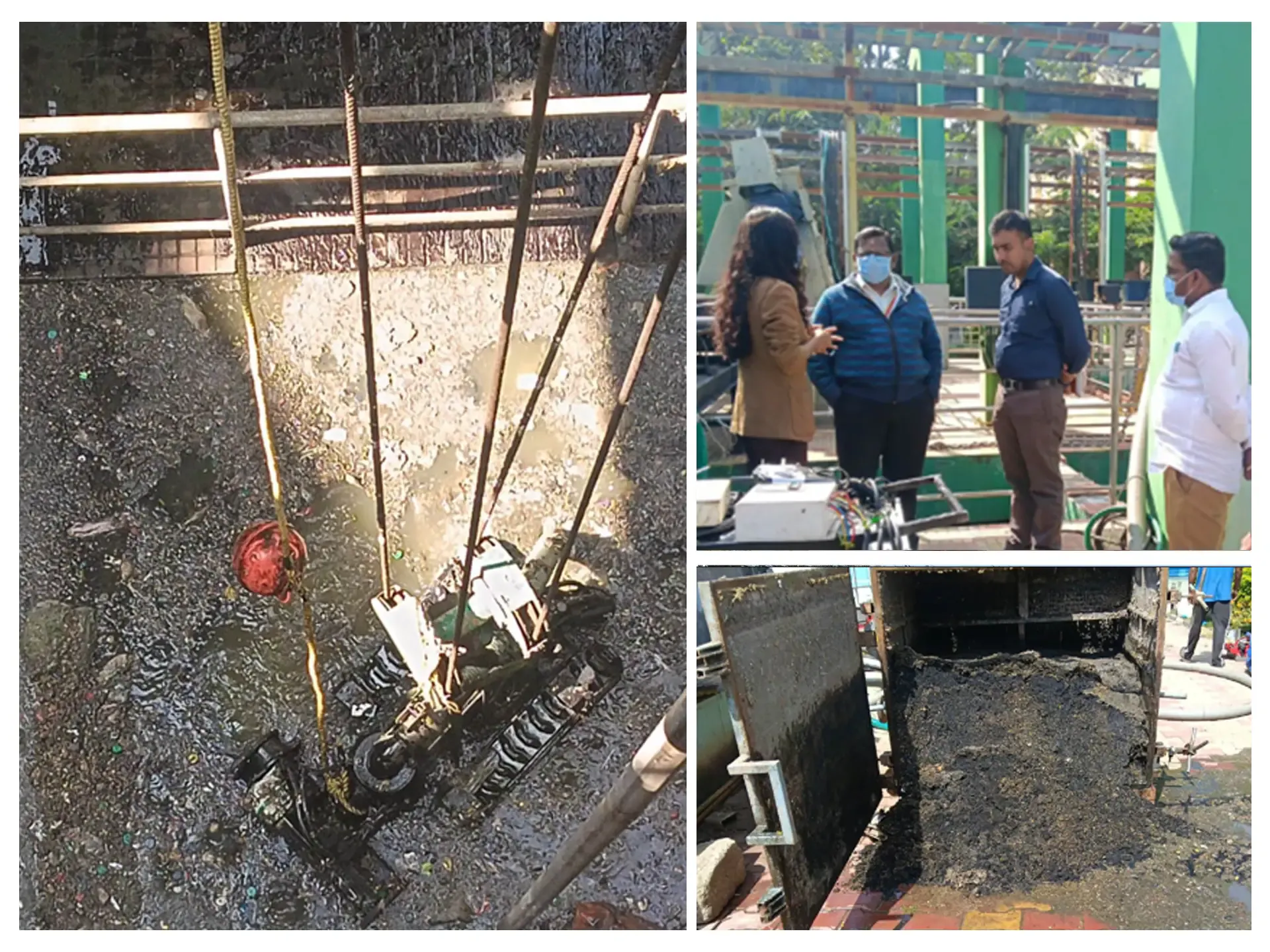
Project: Robotic Wastewater Infrastructure Maintenance Technology: Wilboar – Industrial Cleaning Robot Company: Genrobotic Innovations Pvt. Ltd. Client / Authority: Bangalore Water Supply and Sewerage Board (BWSSB) Deployment Locations: Koramangala, Doddabelle and Kengeri, Bengaluru Application: Deep-well desilting and sludge extraction Deployment Period: March–May 2026
1 Project Background
Maintaining wastewater infrastructure is a critical operational responsibility for urban municipal authorities. Sewage pumping stations and deep suction wells continuously accumulate sludge, grit, sand and other solid debris, affecting pumping efficiency and increasing maintenance requirements. Conventional cleaning practices often involve hazardous confined-space operations, exposing sanitation workers to toxic gases, biological contaminants and physical risks. Furthermore, removing compacted sediment from deep-well floors presents considerable operational challenges for conventional surface-level suction equipment. To address these challenges, Genrobotic Innovations deployed Wilboar, an advanced industrial cleaning robot, across key wastewater infrastructure locations in Bengaluru under BWSSB. The deployments at Koramangala, Doddabelle and Kengeri focused on mechanised desilting and sludge extraction, demonstrating the application of robotics in demanding wastewater maintenance operations.
2. The Challenge: Conventional Wastewater Maintenance
The project addressed several operational challenges associated with maintaining sewage pumping stations and deep suction wells. Hazardous Confined-Space Operations Manual cleaning exposes workers to environments containing hazardous gases such as hydrogen sulphide (H₂S) and methane, along with biological contaminants and other occupational risks. Heavy Sludge and Sediment Accumulation Compacted sludge, abrasive grit and solid debris accumulate at the bottom of suction wells, making effective removal challenging using conventional cleaning methods. Operational Continuity Traditional maintenance practices can require interruptions to pumping operations, creating additional challenges for facilities responsible for continuous wastewater management. Equipment Wear and Maintenance Accumulated grit and sediment can contribute to equipment wear, affecting pumping efficiency and increasing maintenance requirements. These challenges highlighted the need for a specialised robotic solution capable of performing deep-well cleaning while reducing hazardous human intervention.
3. The Solution: Wilboar Industrial Cleaning Robot
Genrobotics deployed Wilboar, a specialised robotic cleaning system engineered for heavyduty sludge extraction and desilting operations in challenging infrastructure environments. Designed for applications involving deep suction wells, tanks, sewage pumping stations and other demanding cleaning environments, Wilboar brings mechanised precision to wastewater infrastructure maintenance. Its adaptable robotic architecture and customisable end-effectors support different cleaning requirements based on site-specific operational conditions. Key Operational Capabilities Mechanised Deep-Well Desilting: Dislodges and extracts accumulated sludge, compacted sediment, grit and solid debris from deep-well floors. Live Operational Deployment: Designed to perform cleaning operations under live wastewater infrastructure conditions, supporting routine pumping activities. Real-Time Monitoring: Supports the monitoring of cleaning depth and sludge extraction progress during operations. Reduced Human Entry: Enables cleaning in hazardous confined spaces without requiring workers to enter these environments for the cleaning operation. Customisable End-Effectors: Adaptable cleaning attachments support diverse operational requirements across infrastructure environments.
4. Project Execution: Wilboar Deployments Across Bengaluru
Wilboar's operational capabilities were demonstrated through deployments and trials at three key wastewater infrastructure locations in Bengaluru.
4.1 Koramangala Deployment | May 2026
At Koramangala, Wilboar carried out desilting operations across multiple days, addressing substantial sludge accumulation while supporting routine pumping schedules.
Recorded operational observations:
- Cleared accumulated waste layers reaching up to 780 mm in thickness.
- Extracted approximately 1.404 m³ of sludge on 15 May 2026.
- Operated alongside scheduled pumping activities ranging from 1 to 4 hours daily.
- Supported deep-well cleaning under live operational conditions.
4.2 Doddabelle Deployment | March 2026
Wilboar underwent operational trials at the Doddabelle wastewater infrastructure site, demonstrating its ability to handle substantial sediment accumulation.
Recorded operational observation:
- Recorded sludge extraction volumes reaching 4.41 m³ during trials on 30 March 2026.
4.3 Kengeri STP Deployment | April 2026
At Kengeri Sewage Treatment Plant, Wilboar addressed significant silt accumulation through mechanised desilting operations.
Recorded operational observation:
- Addressed accumulated silt layers reaching up to 1,300 mm on 6 April 2026.
These deployments demonstrated Wilboar's adaptability to varying wastewater infrastructure conditions and its ability to undertake demanding cleaning operations across multiple locations.
5. Project Outcomes and Operational Impact
The Bengaluru deployments demonstrated the practical value of robotic cleaning systems in wastewater infrastructure maintenance.
Improved Occupational Safety
Wilboar reduced the need for manual entry into hazardous confined spaces during desilting and sludge extraction operations, helping minimise worker exposure to toxic gases and other occupational hazards.
Effective Sludge Extraction
The robot demonstrated its ability to dislodge and extract substantial volumes of accumulated sludge and compacted sediment from deep suction wells.
Operational Continuity
Cleaning activities were performed under live operating conditions, supporting routine wastewater pumping activities and reducing the need for maintenance-related interruptions.
Improved Infrastructure Maintenance
The removal of accumulated grit and heavy sediment helps address material build-up that can affect downstream pumping equipment and infrastructure performance.
Adaptability Across Sites
Deployments across Koramangala, Doddabelle and Kengeri demonstrated the applicability of Wilboar across different wastewater infrastructure environments.
6. Advancing Robotic Wastewater Infrastructure Maintenance
The Bengaluru deployments demonstrate how advanced robotics can address long-standing challenges in municipal wastewater maintenance.
By automating demanding desilting and sludge extraction operations, Wilboar offers an alternative to conventional manual cleaning practices, helping reduce hazardous human intervention while supporting the maintenance of critical urban infrastructure.
Through this deployment, Genrobotic Innovations demonstrates the practical application of industrial robotics in making wastewater infrastructure maintenance safer, more efficient and technology-driven.
Wilboar represents a step towards a future where advanced robotic systems take on hazardous and demanding infrastructure operations, allowing human workers to remain safer.
Frequently Asked Questions
1. What is Wilboar and what is it used for?
Wilboar is an advanced industrial cleaning robot developed by Genrobotic Innovations. It is designed for mechanised desilting, sludge extraction and cleaning operations in deep suction wells, sewage pumping stations, tanks and other challenging infrastructure environments.
2. Where was Wilboar deployed in Bengaluru?
Wilboar was deployed at key wastewater infrastructure locations in Koramangala, Doddabelle and Kengeri, Bengaluru, under BWSSB. The deployments involved deep-well desilting, sludge extraction and operational trials.
3. How does Wilboar perform deep-well desilting?
Wilboar uses its robotic cleaning mechanism and adaptable end-effectors to dislodge and extract accumulated sludge, compacted sediment, grit and solid debris from deep-well floors.
4. Can Wilboar operate under live wastewater conditions?
Yes. Wilboar is designed to perform cleaning operations under live wastewater infrastructure conditions, supporting routine pumping activities during maintenance.
5. How does Wilboar improve sanitation worker safety?
Wilboar reduces the need for workers to enter hazardous confined spaces for desilting and sludge extraction. This helps minimise exposure to toxic gases, biological contaminants and physical hazards.
6. What were the key results of Wilboar's Bengaluru deployment?
The deployments recorded sludge extraction volumes of approximately 1.404 m³ at Koramangala and up to 4.41 m³ during trials at Doddabelle. At Kengeri, the robot addressed accumulated silt layers reaching up to 1,300 mm.
7. What makes Wilboar different from conventional sewer cleaning equipment?
Wilboar is engineered for robotic cleaning and mechanised sludge extraction in challenging environments, including deep suction wells. Its adaptable end-effectors enable different cleaning operations based on site-specific requirements.
8. Who developed Wilboar?
Wilboar was developed by Genrobotic Innovations Pvt. Ltd., an Indian robotics company specialising in advanced robotic solutions for hazardous and challenging environments.