
Disaster Response Robotics and the Future of Public Safety
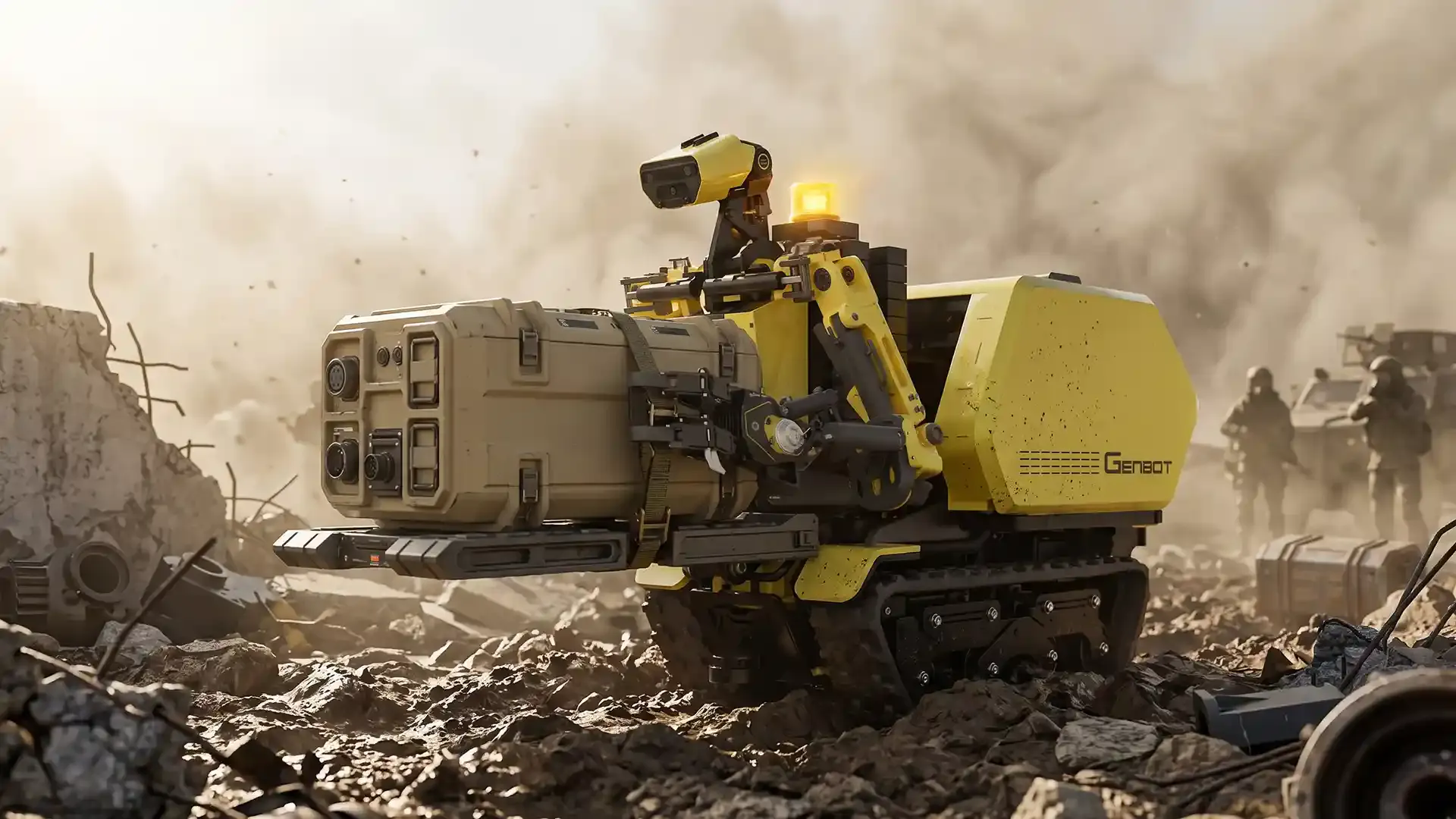
Disasters rarely announce their arrival. A building collapses after an earthquake. Floodwaters swallow roads overnight. Industrial accidents release hazardous materials into densely populated areas. In such moments, the difference between life and death is often measured not in hours, but in minutes. Yet despite remarkable advances in communication, transportation, and emergency management, one reality remains unchanged. First responders are routinely asked to enter environments that are unstable, unpredictable, and potentially lethal. This is where the conversation around robotics becomes more significant than a discussion about machines. At its heart, disaster response is about protecting human life. The question before policymakers, emergency agencies, and technology innovators is increasingly clear: how can societies extend the reach of human responders without exposing them to unnecessary risk? The answer may lie in the growing integration of robotics into disaster response and public safety systems. What is unfolding today is not simply a technological upgrade. It is a fundamental reimagining of how societies prepare for crises, protect critical infrastructure, and safeguard human lives during emergencies.
From Reactive Response to Intelligent Preparedness
Traditional disaster management models have largely been reactive. Emergency services mobilize after a crisis occurs, often operating with incomplete information and limited visibility into rapidly evolving situations.
But the larger shift is already underway.
Modern robotics systems are enabling emergency agencies to gather real time intelligence before human teams enter hazardous zones. Equipped with advanced sensors, cameras, artificial intelligence, and remote control capabilities, robotic platforms can navigate environments that are inaccessible or dangerous for people.
Whether deployed in collapsed structures, flooded tunnels, chemical spill sites, underground infrastructure networks, or fire affected industrial facilities, these systems provide situational awareness that significantly improves decision making.
The implications extend far beyond operational efficiency.
Every piece of information collected before human intervention reduces uncertainty. Every hazard identified remotely increases responder safety. Every minute saved improves survival outcomes.
In disaster management, knowledge is often the most valuable resource. Robotics is becoming one of the most powerful tools for acquiring it.
The Human Side of Public Safety Innovation
Discussions around automation often focus on speed, productivity, and cost. Public safety demands a different perspective.
A firefighter entering a smoke filled structure, a rescue worker searching through debris, or a sanitation team inspecting a flooded sewer network all face significant personal risk. Behind every emergency operation stands an individual willing to place themselves in harm's way for the protection of others.
Yet the real significance lies elsewhere.
The most advanced public safety systems are not designed to replace human courage. They are designed to preserve it.
Robotic systems allow responders to assess dangerous environments remotely, identify structural instability, detect toxic gases, and locate survivors before direct intervention becomes necessary. In many scenarios, the safest rescue operation is the one where technology enters first.
This approach transforms the role of frontline personnel from risk bearers to strategic decision makers.
In doing so, robotics strengthens not only operational capability but also worker dignity, occupational safety, and long term workforce sustainability.
Learning from Global Trends While Solving Local Challenges
Across the world, governments are increasingly investing in robotic technologies for emergency preparedness. Search and rescue robots have been deployed following earthquakes in Japan. Autonomous systems assist firefighting operations in Europe. Drone based emergency response networks are becoming standard components of disaster management strategies in several advanced economies.
The global emergency response robotics market is projected to grow significantly over the coming decade as climate related disasters, urban density, and infrastructure complexity increase.
But emerging economies face a different challenge.
Urban populations are expanding rapidly. Critical infrastructure networks are ageing. Climate change is intensifying floods, landslides, cyclones, and heat related emergencies. Traditional response mechanisms alone may struggle to keep pace with these evolving risks.
This creates an opportunity to build public safety technologies designed specifically for local realities.
Just as sanitation robotics has emerged as a response to unique urban infrastructure challenges, disaster response robotics can evolve through direct engagement with real world operational conditions rather than purely laboratory driven innovation.
Building Resilient Cities Through Robotics
Disaster response is often viewed as a standalone emergency function. In reality, it is deeply connected to broader urban resilience.
A city capable of rapidly assessing damaged infrastructure, monitoring underground utilities, identifying hazards, and restoring critical services recovers faster after crises. Recovery speed directly influences economic stability, public confidence, and long term development outcomes.
This is where robotics becomes part of a larger urban resilience strategy.
Autonomous inspection systems can monitor bridges, tunnels, drainage networks, and utility corridors. Intelligent sensors can identify vulnerabilities before they evolve into disasters. Remote operated platforms can maintain critical infrastructure during extreme weather events.
The implications extend beyond emergency management.
Robotics enables cities to shift from crisis response to risk prevention.
And that transition may ultimately prove more valuable than any single technological breakthrough.
Indigenous Innovation and National Preparedness
Every nation must eventually answer an important strategic question. Should critical public safety technologies be imported, or should they be developed within domestic innovation ecosystems?
For countries confronting diverse disaster risks and complex infrastructure environments, indigenous innovation offers distinct advantages. Local engineering teams understand operational realities, regulatory frameworks, environmental conditions, and resource constraints in ways external technologies often cannot.
This is where deep technology companies working at the intersection of robotics and public infrastructure play a critical role.
Experience gained through deployments in sanitation systems, hazardous environments, and public infrastructure operations often provides valuable insights that can inform broader emergency response applications.
The future of public safety innovation will likely depend on organizations capable of translating field experience into scalable technological solutions.
Because effective disaster response is rarely built inside research facilities alone. It is shaped through engagement with real challenges, real environments, and real communities.
Beyond Technology: A New Social Contract for Safety
As societies become increasingly urbanized, public expectations around safety continue to evolve. Citizens expect governments not only to respond to disasters but to anticipate them, mitigate them, and reduce preventable risks wherever possible.
This is where the conversation becomes more important than robotics itself.
Public safety technologies represent a broader commitment to protecting human life through innovation. They reflect a societal belief that dangerous work should become safer, emergency response should become smarter, and infrastructure should become more resilient.
The adoption of robotics in disaster management is therefore not merely a technological decision. It is a governance decision.
It signals a willingness to invest in systems that prioritize preparedness over reaction and prevention over recovery.
The Future Will Reward Preparedness
History often remembers disasters through their destruction. Yet what truly shapes the future is how societies choose to respond afterward.
The coming decades will place unprecedented demands on public safety systems. Climate volatility, urban expansion, infrastructure stress, and emerging risks will test the resilience of cities and institutions alike.
In that environment, robotics will increasingly serve as a force multiplier for human capability. Not because machines are replacing people, but because they are enabling people to operate more safely, intelligently, and effectively.
The future of disaster response will belong to societies that recognize a simple but powerful truth: protecting human life is not merely an operational objective. It is the foundation of sustainable development itself.
And as robotics becomes woven into public safety systems, we may discover that the most important innovation is not the machine entering the danger zone. It is the human being who no longer has to.
Related Blogs

Industrial Robotics Misconceptions You Should Know
When people hear the word robotics, they often imagine machines working alone, performing tasks perfectly, and replacing human effort entirely. But that picture is incomplete.

Extreme Environment Robotics in India Explained
When we think about robotics, we often picture controlled environments and predictable systems. But in India, robotics is evolving in places that are anything but controlled.

Robotics Startups in India Using AI and Automation
India’s startup ecosystem is evolving beyond software platforms and digital applications. A new generation of founders is building technologies that interact directly with the physical world. This shift has led to the rise of the robotics startup India ecosystem, where engineers and innovators are developing machines designed to solve real industrial and societal problems.